
Why Boca Raton Has a Roof Rat Problem
Barrel Tile, Canal Banks, and a Canopy That Connects Everything
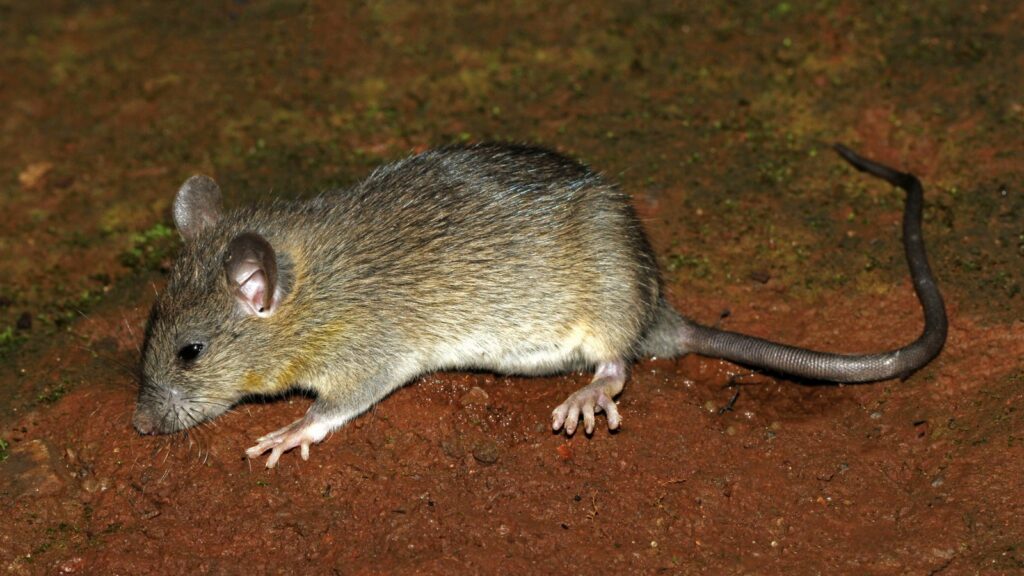
The rat in your attic almost certainly isn’t the rat people picture. Norway rats — the heavy gray-brown sewer rats most of the country knows — barely register in coastal South Florida. What you have in Boca Raton is the roof rat (Rattus rattus): a sleek, dark, climbing rat that lives above the ground line, moves through tree canopy, and treats a barrel-tile roof the way a Norway rat treats a basement. Boca is, structurally, one of the best roof rat habitats in the state. The Mizner-era housing east of Federal — Old Floresta, Royal Palm Yacht & Country Club, Por La Mar, Spanish River Land — was built with barrel-tile laid on wood battens, and the gaps between tiles open straight into wood-truss attics. The oak and ficus canopy gives a rat a continuous highway from yard to roofline. The canal grid through Boca Harbour, Golden Harbour, and Lake Rogers Isles adds a second route — seawall vegetation, dock pilings, and finger-canal banks rats use the way they use tree limbs. West of the Turnpike — Boca West, Boca Pointe, Boca Falls, Mizner Country Club, Stonebridge, Broken Sound — the picture changes but the pressure doesn’t: deep mulch beds, daily irrigation, and golf-course lake edges sit against the foundations of newer slab homes, and the rats nest in the landscape and climb the exterior at night.
Most rodent problems in Boca don’t start with a rat walking through a doorway. They start with a tile gap above a gable end nobody looks at, a soffit vent screen that’s been gone for two seasons, a palm frond grown across a section of roofline, or a seawall hedge that’s never been thinned. By the time the scratching shows up at 11 p.m., the colony is established and a season’s worth of droppings is on top of the insulation. Hoffer Pest Solutions has worked Boca’s streets for more than 50 years — Old Floresta cottages, Sanctuary-side waterfront, west-of-441 country clubs — and our crews know where roof rats get in on each housing type before we get on the ladder. Call 954-892-5742 and, in most cases, we’re on your driveway the same day.
Our Boca Raton Rodent Control Approach
Trapping a rat without sealing the roof is a temporary fix. Our service is built in this order on every Boca property:
Inspection: Reading the Roof Before Touching It
The first visit is a full exterior climb and an attic check. On a Mizner-era barrel-tile roof, we check tile ridges and valleys, gable ends, soffit vents, ridge vents, and the wood fascia behind the gutter line. On a 1990s-or-newer Boca West or Boca Falls home, entry points look different: torn roof-vent screens, gaps where the AC line set penetrates the wall, weather seals failing at the bottom of the garage door, lifted plumbing stack flashings, dryer vent louvers stuck open. We also walk the landscape — palm fronds and oak limbs touching the roofline are roof rat highways, and shrub clusters within three feet of the foundation are nesting habitat. This is the map for everything that follows.
Exclusion: Sealing the Roof So It Stays Sealed
For roof rats, exclusion is the work. We seal soffit vents with quarter-inch hardware cloth, install or replace ridge vent guards, cap chimneys, sleeve plumbing stack penetrations with foam-and-mesh combinations, and seal the gable-end and tile-line gaps that let rats drop into the attic in the first place. On older Old Floresta and RPYCC roofs, decades of repairs often leave tile-to-batten gaps that hardware cloth or copper mesh can close without disturbing the tile profile. On newer west-Boca slab homes, exclusion is more about ground-level penetrations and garage door seals than the roof. We don’t seal anything until we’re confident every active rat is out — sealing rats inside creates a worse problem than the one you called about.
Trapping: Snap Traps, Not Glue Boards
Inside the attic, garage, or any active interior space, our standard is snap traps. Snap traps kill quickly, let us remove the carcass on the next visit (no rat decomposing in your wall void), and don’t catch the things you don’t want caught — geckos, songbirds, the neighbor’s cat that wandered through the pool cage. Glue boards aren’t our primary tool: they’re slow, they hold non-target animals, and the homeowner ends up disposing of them. Where interior bait stations are appropriate, we use tamper-resistant locked stations placed where children and pets can’t reach them, and we document every placement.
Exterior Bait Stations: Locked, Anchored, Monitored
Around the exterior, we set tamper-resistant locked bait stations along the foundation, fence lines, seawalls where applicable, and the back edge of mulch beds. Each station is anchored so it can’t be moved by a child, dog, or raccoon, and the bait is only accessible to a rodent that climbs in. On waterfront properties along the Intracoastal or the finger-canal grid in Boca Harbour and Lake Rogers Isles, station placement is deliberate — we put them where roof rats are actually traveling along the seawall and dock line, not in a grid. Stations get checked and refilled on every service visit; any station with no activity for two visits gets repositioned.
Sanitation: What the Homeowner Has to Own
A rat doesn’t need much, and we’ll tell you plainly what to change. Pet food belongs in a sealed container, not an open bag on a garage shelf. Bird feeders should come down or move well away from the house. On older streets where mango and avocado trees are part of the yard — every other Old Floresta and Boca Bath & Tennis lot has at least one — fallen fruit needs to be picked up; a ripening pile under a mango tree will hold a rat colony through the summer. Cut mulch back to two or three inches within three feet of the foundation, and thin dense ground cover against the wall. None of it is glamorous, but all of it matters.
Ongoing Service: Quarterly Visits, Documented
After inspection, exclusion, and knock-down are complete, we move the property onto a quarterly schedule. Each visit re-checks every station, walks the roofline for new tile gaps or screen failures (Boca weather and canopy are constantly producing new entry points), notes activity in insulation or along the seawall, and refreshes the exterior barrier. For snowbird properties — and a large share of country-club and oceanfront-condo homes go vacant May through November — stay on the schedule through the off-season. Vacant houses are exactly the houses roof rats settle into.
Signs You Have Rodents in Your Boca Raton Home
Roof rats almost never let themselves be seen the way Norway rats do. The signs they leave are everywhere — most homeowners just don’t know what they’re looking at.
• Droppings shaped like a grain of rice — about half an inch long, pointed at both ends, dark brown or black. Norway rat droppings are blunt-ended and capsule-shaped. Pellets on attic insulation, along a garage rafter, or behind storage boxes tell you which species is there.
• Gnaw marks on attic wiring, PVC stacks, fascia, and framing around roof penetrations. Fresh gnaws are light-colored; old ones turn dark. Chewed wire turns a rodent problem into a fire risk and moves to the top of the work order.
• Grease and rub marks along rafters, plumbing stacks, and the underside of soffits — dark smudge trails from rats traveling the same route night after night.
• Attic noise after dark, peaking roughly 9 p.m. to 2 a.m. with a smaller pre-dawn pulse. If you can hear it from the bedroom below, the colony is not small.
• Gnawed fruit in the yard — mango and avocado left on the ground show up with sharp-edged bites, not the ragged tear of a squirrel or possum.
• Damage to palm fronds where they meet the trunk. Roof rats nest in the dead-frond crown of cabbage and royal palms; a heavily trimmed palm with no skirt is much less attractive habitat.
• Pet food disappearing faster than the bowl explains, plus chew damage on pet food bags or storage bins in the garage.
Rodent Pressure Across Boca Raton
East-of-Federal historic Boca — Old Floresta, Spanish River Land, Por La Mar, and the older streets through Royal Palm Yacht & Country Club — carries the highest barrel-tile-driven rat pressure in the city. Original Mizner-era tile over wood-truss attics, a continuous oak and ficus canopy, and yards that have held fruit trees for forty or fifty years add up to a habitat a roof rat won’t leave on its own. Work here is heavier on the roof: sealing tile-line gaps, restoring soffit screening, trimming canopy off the roofline.
The waterfront and Intracoastal-adjacent stretches — The Sanctuary, the inner streets of RPYCC, Boca Harbour, Golden Harbour, Lake Rogers Isles — add a canal corridor on top of everything the historic streets carry. Seawalls with overgrown hedges, dock storage boxes, boat lift covers, and finger-canal banks make a continuous travel route. A property can be exclusion-tight on the roof and still pick up new pressure off the seawall every season; service here weights toward the dock line and the back-of-property landscape edge.
West-of-Turnpike country-club communities — Boca West, Boca Pointe, Boca Falls, Mizner Country Club, Stonebridge, Broken Sound — present a different rodent equation. The houses are newer (1980s–2000s slab-on-grade) and the roofs are tighter, so entry-point work is usually at ground level. What replaces the roof problem is landscape: HOA-maintained mulch beds six to twelve inches deep against the foundation, daily irrigation, and golf-course lake edges within a few yards of the back patio. Rats nest in the landscape, climb the exterior at night, and probe garage door seals, AC line sets, and dryer vents for a way in.
Downtown Boca and the Mizner Park corridor carry a commercial-driven profile — restaurant dumpsters, valet drop zones, late-night food waste, a dense food-service footprint. The condos and townhomes around Mizner Park and along Federal Highway sit inside that ecosystem, and the service question here is rarely about a single property — it’s about the block. We work the exterior hard, seal every utility penetration, and have an honest conversation about which neighboring conditions are driving the pressure.
Hoffer Pest Solutions: Boca Raton Rodent Specialists
We’re a family-owned South Florida pest company in our second half-century of work. Our technicians have spent careers reading Boca’s rodent pressure points — the way a barrel tile sits on a 1929 batten, the way a finger-canal seawall draws rats from three properties down, the way a Boca West irrigation cycle keeps a mulch bed wet enough to nest in year-round. Rodent work is finish work: anyone can drop a snap trap, but the difference between a quick clear-out and a property that stays clear is in the exclusion details and the willingness to come back and verify the work is still holding. Every service is backed by our satisfaction guarantee, and every visit is documented. Call 954-892-5742 — same-day service in most cases.
Rodent control is one piece of a broader Boca Raton pest control plan; for ants, termites, mosquitoes, cockroaches, bed bugs, and ongoing residential protection, start at the Boca Raton pest control hub or call the number above. For Hoffer’s full rodent control coverage across South Florida, see our general rodent control page.
Frequently Asked Questions: Rodent Control in Boca Raton
Which rodents are common in Boca Raton?
Roof rats are the rodent we most often deal with in Boca Raton homes. These rodents are agile climbers that use trees, palms, rooflines, soffits, barrel tile gaps, and utility penetrations to reach attic spaces. Norway rats can occur, but are usually less common in coastal South Florida than many homeowners expect. House mice may also show up in garages, storage areas, or commercial spaces, especially where food, clutter, or small wall openings are present.
The species matters because the control strategy changes. A roof rat issue is usually about overhead access, attic activity, exterior travel routes, and roofline exclusion. A mouse issue often involves smaller gaps, stored goods, and interior harborage. Droppings, gnaw marks, travel rubs, and where the activity is found help narrow it down. If you are hearing movement above the ceiling at night, roof rats are a likely suspect, but a professional Boca Raton pest inspection is the most reliable way to confirm what is active.
What is the hardest rodent to get rid of?
Roof rats are often the hardest rodents to resolve in South Florida homes because these pests do not rely on ground-level entry alone. These rodents climb palms, branches, fences, gutters, and textured walls, then use small gaps along the roofline to reach attics. A single opening near a soffit, vent, plumbing stack, or tile edge can keep the problem going even after traps catch several animals.
The common mistake is treating the visible activity while leaving the access route intact. Catching one rat does not mean the structure is protected, especially if food sources remain outside or vegetation still touches the roof. Roof rats are also cautious around new objects, so trap placement and reading travel paths matter.
These rodents are not impossible to manage, but require a full approach: confirming the species, removing active animals, sealing entry points at the right time, and reducing attractants around the property. That combination is what makes the difference.
How can I tell if I have a rodent infestation?
Several signs point to rodent activity, even if you never see the animal. Droppings are one of the clearest clues. Roof rat droppings are typically dark, narrow, and pointed at the ends, often found on attic insulation, garage rafters, or behind stored items. You may also notice:
- Scratching or scampering above the ceiling after dark
- Gnaw marks on wood or plastic
- Chewed food packaging
- Grease marks along beams
- Shredded nesting material
Outside, look for gnawed fruit, disturbed pet food, chew damage on storage bins, or activity around dense landscaping. A single sign does not always prove an active infestation. Old droppings can remain after previous activity, and attic noises can sometimes come from wildlife rather than rats or mice.
Fresh droppings, repeated nighttime noise, new gnawing, or multiple signs in different areas are stronger indicators. If those appear, it is time to have the structure checked before the activity spreads or entry points become harder to track.
Do rats leave the attic during the day?
Rats usually leave the attic at night, not during the day. Roof rats are most active after dark, when traveling to food and water sources, moving through trees and rooflines, and returning to nesting areas before morning. That is why many homeowners hear scratching, light running, or chewing sounds late in the evening or before dawn.
Daytime movement can still happen. Rats may shift around if the attic gets too hot, if disturbed by work in the home, if food is scarce, or if the population is large enough that competition pushes some activity into daylight hours. Seeing a rat during the day does not prove a severe infestation by itself, but it should not be ignored.
If you hear daytime sounds along with droppings, gnaw marks, or nighttime activity, the attic should be inspected. The goal is to learn whether rats are nesting inside, entering from outside, or simply traveling through a nearby void.
What should I expect during a rodent control service?
A proper service starts by finding how rodents are using the structure, not by placing traps at random. With Hoffer Pest Solutions, our team checks the exterior, attic, or active interior areas when accessible, roofline openings, vents, soffits, garage seals, utility penetrations, and nearby conditions that may be attracting activity. We look for droppings, rub marks, gnawing, tracks, nesting material, and entry points that match the evidence.
From there, the service may involve snap traps in active interior areas, tamper-resistant bait stations outside where appropriate, and exclusion work to close openings once active animals are not likely to be trapped inside. We may also point out sanitation changes, such as sealing pet food, picking up fallen fruit, reducing clutter, or trimming vegetation away from the roof.
Every property is different, so the exact steps depend on what we find. You should expect clear findings, a control approach that fits the structure, and practical guidance on what needs to change to reduce future issues.
How long does rodent control typically take to resolve an infestation?
The timeline depends on the size of the infestation, the number of entry points, the structure type, and how available food and shelter are around the property. A small, recent issue with one obvious opening may move faster than a long-standing attic infestation with several roofline gaps, heavy landscaping, and stored food in the garage.
Rodent control is rarely just one action. Trapping removes active animals, but exclusion prevents new ones from using the same openings. If entry points are sealed too early, rodents can be trapped inside. If they are never sealed, new activity can continue even after several catches. Sanitation also affects progress, since accessible pet food, fallen fruit, birdseed, and dense ground cover can keep rodents near the structure.
After the initial inspection, we can give a clearer sense of what the property needs. The main thing to know is that faster results come from combining removal, exclusion, and attractant reduction rather than relying on traps alone.
When should I call a professional rodent control company in Boca Raton?
Call a professional when you hear repeated attic noise, find fresh droppings, see gnaw marks, notice chewed food packaging, or suspect rodents are entering through the roofline, garage, or utility openings. You should also get help if you have caught rodents more than once, because repeated catches usually mean the access route is still open.
Professional help is especially useful when activity is in an attic or wall void. Those areas can be difficult to inspect safely, and sealing the wrong opening at the wrong time can make the situation worse. Electrical gnawing, strong odors, or signs in multiple rooms are also reasons to act quickly.
Hoffer Pest Solutions provides Boca Raton rodent control backed by over 50 years of South Florida experience. We offer same-day service in our service areas when customers call before noon, and we can provide a free pest control quote. If signs are fresh or recurring, scheduling an inspection is the next step.
Are rodent control treatments safe for pets and children?
Rodent control can be performed with safety in mind, but no trap, bait, or pest control product should be treated casually around pets or children. Placement is the key factor. Inside active areas, snap traps are placed where rodents are traveling and where household contact can be limited. Outside, tamper-resistant bait stations are locked and positioned so the bait is accessible to rodents inside the station, not left exposed in open areas.
There are still responsibilities for the household. Children and pets should be kept away from service areas, stations should not be moved or opened, and any damaged station or disturbed trap should be reported rather than handled. Pet food, birdseed, and pantry goods should be stored in sealed containers to reduce both attractants and accidental contact with contaminated materials.
If someone may have touched or ingested a product, contact the appropriate medical, veterinary, or poison control professional. For routine service questions, we can explain what was placed, where it was placed, and what precautions apply.
Do rodent control services include exclusion work and repairs to prevent re-entry?
Yes, exclusion is a central part of our rodent control approach, because trapping without closing entry points usually leads to repeat activity. Hoffer Pest Solutions looks for the openings rodents are actually using, such as soffit gaps, damaged vent screens, roofline openings, plumbing stack penetrations, garage door gaps, and utility line openings. Depending on the findings, exclusion may involve materials such as hardware cloth, mesh, vent guards, caps, sealants, or other rodent-resistant methods suited to that opening.
There is an important distinction between exclusion and general construction. We can seal many common rodent access points, but major roof damage, rotten fascia, structural repairs, or large construction issues may require a licensed trade professional. We also avoid sealing in a way that traps active rodents inside, since that can create odor and sanitation problems.
If re-entry prevention is your priority, ask for the inspection to focus on both active signs and access points. The strongest result comes from removal and exclusion working together.