Pest Control Built for the Barrier Island
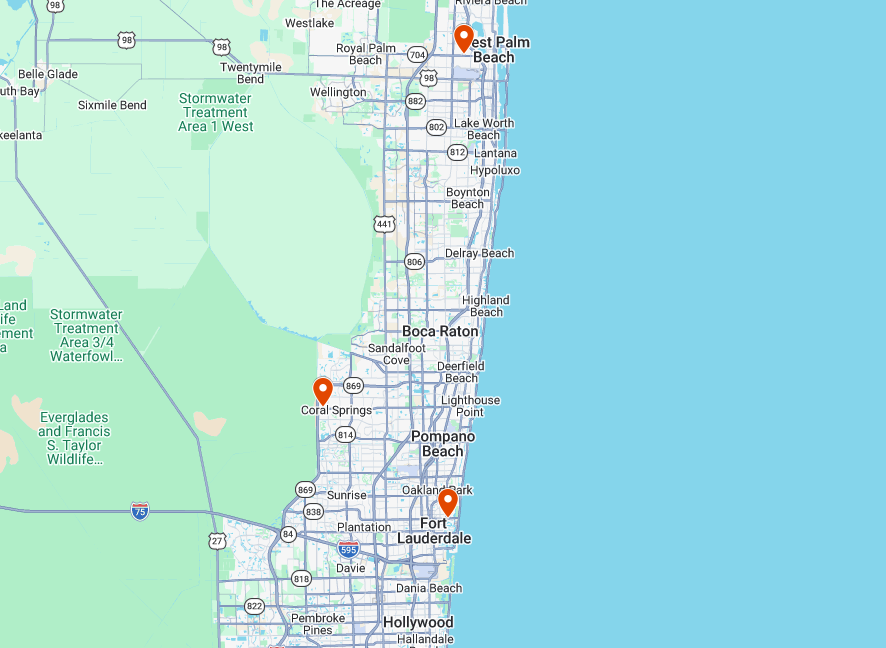
Pest control on Sunny Isles Beach doesn’t look like pest control anywhere else in our service area, because almost no other city in Southeast Florida is built the way this one is. You’re on a narrow barrier island, less than half a mile wide in most spots, with the Atlantic on one side and the Intracoastal on the other and ~2.5 miles of Collins Avenue running between them. Almost every home is a unit inside a high-rise — the 1960s–70s low-rises around Newport and the Samson stretch, the modern towers in the mid-island cluster like Trump Towers, Jade Signature, and Porsche Design Tower, and the ultra-luxury Acqualina buildings at the north end. That changes the pest equation completely. German cockroaches travel between units through shared plumbing chases and trash chutes, not across kitchen baseboards. Drain flies emerge in three apartments on three floors at once because the vertical drain line is the breeding site, not any one bathroom. Spiders take over oceanfront balconies because the building’s own lights are pulling in their food supply every night. And every winter, hundreds of units across the city sit closed for months while their owners are traveling, which means pest pressure builds quietly behind a locked door until someone walks back in. Hoffer Pest Solutions has been working Miami-Dade and the broader Southeast Florida coast for more than 50 years, with Associate Certified Entomologist (ACE) oversight on every plan, same-day service when you call early enough in the day, and discreet concierge coordination for the buildings that need it. Call 954-945-8035 or request a free inspection.
Read our complete guide to how pest control works in Florida condos and apartments to understand what’s covered by your HOA and what’s your responsibility as a unit owner.
Why Sunny Isles Beach Homeowners Choose Hoffer
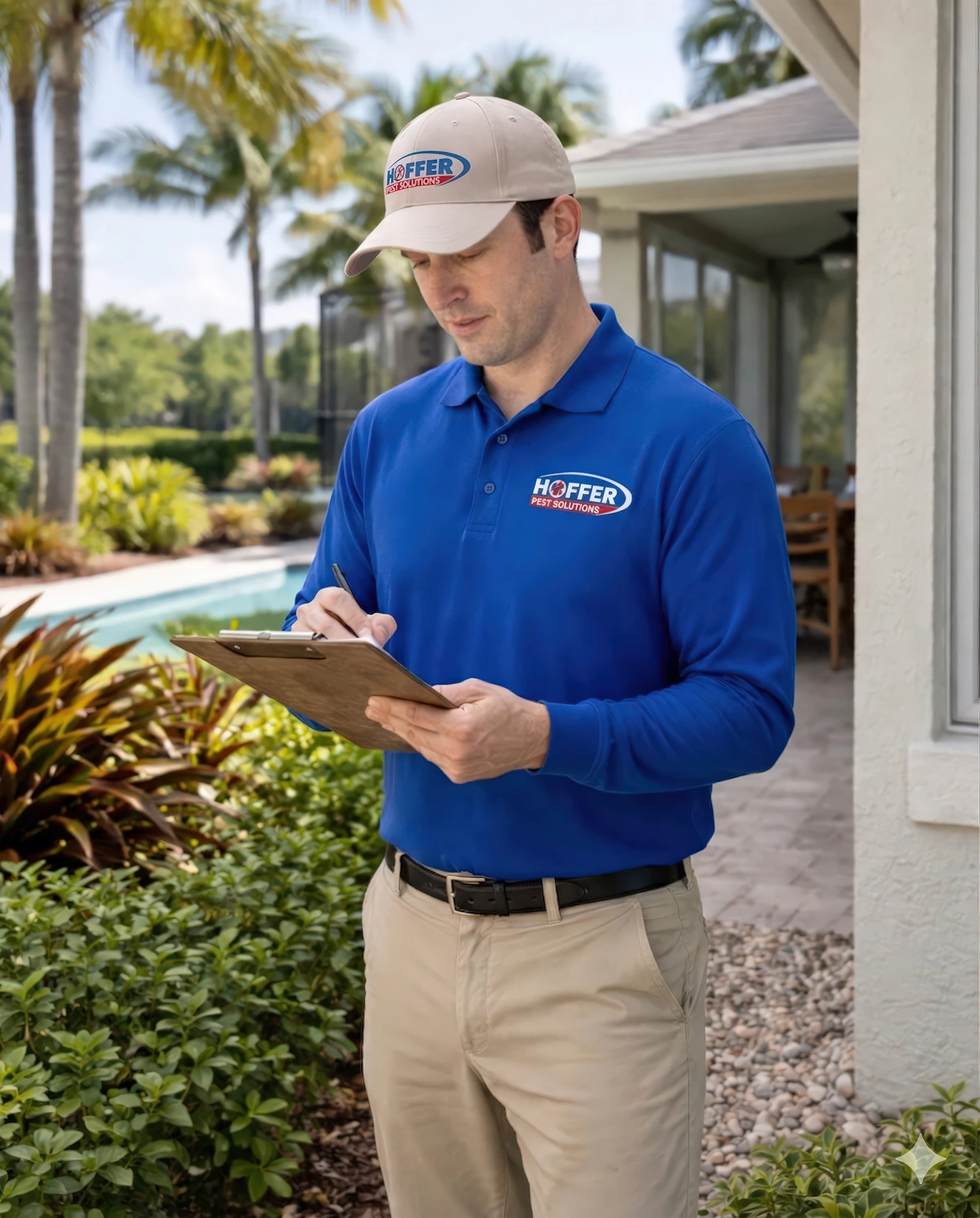
Pest control in a city like Sunny Isles Beach is a relationship business. Most homes here are part of an HOA, a residential high-rise community, or a luxury condo tower — places where the same neighbors see the same service trucks pull in week after week, and reputation gets compared in lobbies and on amenity decks. We’ve worked these oceanfront corridors for more than 50 years, and we built the company on the same principle Sunny Isles Beach families and seasonal residents keep asking us to deliver: show up when you say you will, treat the home the way you’d treat your own mother’s, and stand behind the work.
A few things that come standard
- 50+ years of pest control in Palm Beach, Broward, and Miami-Dade counties.
- ACE-credentialed leadership — Associate Certified Entomologist on staff and reviewing the work.
- Same-day service available when you call early enough in the day; we’ll always tell you straight whether we can fit you in today or first thing tomorrow.
- Free inspection before you commit to anything — including a real walk of the slab line, soffits, and lanai, not a five-minute drive-by.
- Satisfaction guarantee between visits. If something comes back, so do we.
- 4,000+ five-star reviews across South Florida.
- Family- and pet-safe treatments — targeted to entry points and pressure zones, applied with the kids, the dogs, and the grandkids in mind.
Cockroach Control in Sunny Isles Beach
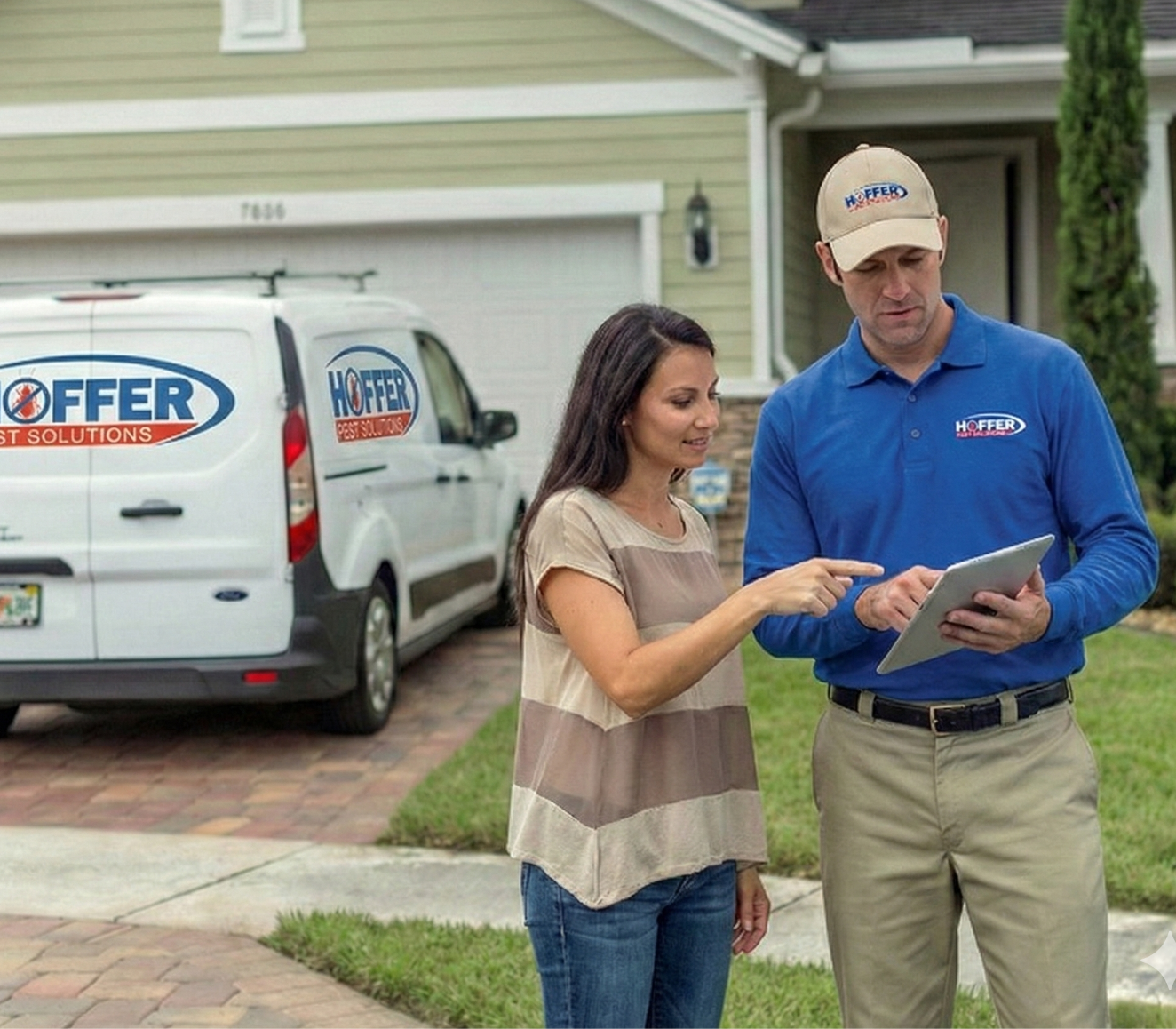
If you live in a high-rise condo on Collins Avenue, the cockroach you’re most likely to meet is the German cockroach, and the reason isn’t your housekeeping — it’s the building. German roaches reproduce fast and travel through every shared cavity a high-rise has to offer: plumbing risers behind kitchen sinks, electrical conduit running between units, trash chute walls, and the gap behind the cabinetry where two adjacent units share a wall. A perfectly clean unit on the 22nd floor can develop an infestation because a neighbor two doors down or two floors below has an unaddressed problem and the roaches are migrating up the riser at night. Older 1960s–70s low-rises around the Newport area also see American and Australian cockroaches (“palmetto bugs”) pushing in from exterior landscaping, parking-garage drains, and irrigation valve boxes, especially during the rainy season. Treating one unit in isolation almost never solves a building-wide problem, which is why our approach includes targeted interior gel-bait placements, inspection of the adjacent units that share your stack when the HOA agrees, and exterior harborage work in shared common areas. We’re used to coordinating with building management and concierge desks, and treatments are pet- and family-safe so you don’t have to vacate for hours afterward. Read more about German roach control in Florida apartment and condo buildings, or call 954-945-8035 to schedule an inspection.
Ant Control in Sunny Isles Beach Homes and High-Rises
Living thirty stories above the ground doesn’t make you safe from ants — it just changes the route they take to get to you. Ghost ants and white-footed ants ride up plumbing chases and electrical conduit from ground-level landscaping all the way into high-floor kitchens, where they trail across granite counters and behind dishwashers looking for moisture and sugar. Crazy ants push in from exterior amenity decks, pool surrounds, and balcony planters, often appearing on lower floors first and working upward as the colony expands. In older Newport-area low-rises with more wood components, carpenter ants are also a real possibility, especially in any unit with a history of plumbing leaks or water-damaged trim. DIY sprays usually clear the foragers you can see and leave the colony intact behind a wall — which is why the ants are back a week later. Our ant control starts with identifying the species (each one bait-responds differently), then matches gel baits, non-repellent residuals, and entry-point sealing to that species. Learn more about our ant control services or call 954-945-8035.
Mosquito Control in Sunny Isles Beach
Sunny Isles Beach gets less mosquito pressure than the canal-grid suburbs on the mainland — but “less” doesn’t mean “none,” and the breeding sites that do exist here are usually hidden in plain sight. The mangrove edge at Haulover Inlet at the south end of the city produces a steady saltwater-tolerant population through the wet season. Amenity decks on residential towers hold standing water in planters, ornamental fountains, drainage saucers, and the bromeliads that property managers love for landscaping — each of which can produce Aedes aegypti in a few days. Oceanfront balconies catch the worst of it because building exterior lighting pulls in flying insects after dark, and the higher floors are no safer than the lower ones once mosquitoes ride the building updrafts. If you’ve ever tried to use your balcony at dusk during the wet season and given up, you know the problem. Our mosquito service treats adult populations on a recurring schedule, identifies and addresses the breeding sites your property manager may not be inspecting, and uses corrosion-resistant equipment that holds up to oceanfront salt air. Learn more about no-see-ums and biting midges on Florida’s oceanfront, or call 954-945-8035 to schedule a consultation.
Rodent Control in Sunny Isles Beach
High-rise living cuts rodent pressure significantly compared to ground-floor single-family homes — but “cuts” isn’t “eliminates.” Roof rats access lower- and mid-floor balconies by climbing palm trees and exterior landscaping that’s been allowed to grow against the building envelope, and they exploit gaps around utility penetrations, exhaust vents, and aging soffit returns on older buildings. Parking garages and trash rooms are the other major pressure point — both stay relatively warm and dry, both have food residue and harborage, and both connect directly into the building’s elevator and stair cores. Once a population is established in a garage or trash room, it doesn’t stay there. Our rodent control combines a careful exterior walk of the building envelope (the parts you can actually inspect from your unit and balcony), trapping and monitoring in the common areas with property-management cooperation, and exclusion work at the specific entry points we identify. We don’t just toss bait stations and walk away. Read more about our rodent control services or call 954-945-8035.
Termite Control in Sunny Isles Beach
Termite exposure in Sunny Isles Beach is genuinely split by building age. The modern concrete-and-steel towers built from the 2000s onward — Acqualina, Jade Signature, Porsche Design Tower, the Ritz-Carlton Residences — have very little exposed wood in their structural envelopes, which means whole-structure subterranean termite risk is low and most of the termite calls we get from those buildings involve drywood termites in cabinetry, doors, baseboards, and decorative trim inside individual units. The older 1960s–70s low-rises around Newport and the southern Samson stretch are a different story: they have wood framing, wood balconies, wood roof structures, and decades of exposure to Miami-Dade’s two relevant termite categories. Drywood termites push into attic rafters, fascia, and any exposed wood through swarms, often leaving wings on windowsills and small frass piles as the first sign. Subterranean termites — including the native Eastern subterranean (Reticulitermes flavipes) and the invasive Asian subterranean (Coptotermes gestroi), which has been established in Miami-Dade since the 1990s — travel up through soil into slab penetrations and the bottom plates of exterior walls. For contained drywood activity we lead with spot treatments and no-tent treatment; full structural fumigation is also available when the infestation justifies it. For subterranean activity we install termiticide soil barriers. Read more about our termite control services or call 954-945-8035.
Our Sunny Isles Beach Service Guarantee
Every treatment we do in Sunny Isles Beach is backed by the same promise: if a pest we treated comes back between scheduled visits, we come back too — at no extra charge — and we keep coming until it’s handled. Our standard recommendation for most Sunny Isles Beach condos and high-rises is quarterly preventative service, with a monthly mosquito add-on during the rainy season for oceanfront units and balconies. Owner-occupied or seasonal residence, ultra-luxury tower or older low-rise, family condo or investor rental — the same standard applies.
Service Areas Around Sunny Isles Beach
We also serve the cities that border Sunny Isles Beach along the Miami-Dade coast. To the north, Aventura is also luxury-oriented but mixes mid-rise, mall, and golf-course landscaping into its pest profile, which gives it a heavier ant and mosquito story than the high-rise corridor. To the south, Miami Beach brings older Art Deco housing stock and a dense hospitality footprint that drive a different set of cockroach, rodent, and bed-bug patterns. Just west across the 163rd Street Causeway, North Miami Beach is the inland canal-grid suburb whose 1950s slab homes and drainage canals produce a termite and mosquito profile that’s almost the opposite of Sunny Isles Beach’s vertical condo reality. The same Hoffer team handles the unincorporated edges between all of these — Haulover, the Intracoastal corridor, and the Collins Avenue spine — so coverage doesn’t drop at any of these city lines.
Contact Hoffer Pest Solutions
Hoffer Pest Solutions
1975 E Sunrise Blvd #503
Fort Lauderdale, FL 33304
954-945-8035
Get Started With Hoffer Pest Solutions Today
Request a Free Quote




Sunny Isles Beach Pest Control FAQs
Real questions we get from Sunny Isles Beach homeowners — about high-rise condos, seasonal residences, oceanfront balconies, and the unique pest pressures of vertical island living. If you don’t see yours, give us a call and we’ll walk you through it.
Does my high-rise condo HOA cover pest control inside my unit?
In almost every Sunny Isles Beach building, the answer is no. HOAs and property management typically cover common areas — lobbies, hallways, trash rooms, parking garages, amenity decks, and exterior landscaping — and the inside of your unit is your responsibility as the owner. That split is why so many homeowners end up confused about why ants keep coming back after the building “sprayed” or why German roaches show up in a brand-new kitchen. The HOA’s common-area treatment doesn’t reach inside your walls, your cabinets, or your appliances. We treat the interior of your unit while your building handles the exterior, and where the problem is clearly building-wide we coordinate directly with property management. Call 954-945-8035 or request a free inspection and we’ll walk you through what’s covered and what isn’t.
I've been away for several months — should I have my unit inspected when I get back?
Yes, and ideally before you start unpacking. Units that sit closed for four to six months develop pest pressure quietly — drain flies breeding in P-traps that have dried out, ants finding food residue in pantries, German roaches migrating in from neighboring units while no one’s home to notice, and the occasional rodent if the building has any envelope gaps. A re-entry inspection lets us check the kitchen, all bathrooms, the laundry area, the pantry, and the entry points around plumbing penetrations and exterior walls. We can also coordinate access through your concierge or property manager if you’d prefer to schedule it before you fly in. Call 954-945-8035 and we’ll set it up.
How do you treat for German roaches in a high-rise without spreading the problem to neighboring units?
Short answer: we lead with targeted gel baits and non-repellent residuals inside the affected unit, not aerosol sprays. Bait-and-residual treatment kills the colony at its source rather than scattering roaches into the wall voids and adjacent units the way repellent sprays often do. We also inspect the units immediately above, below, and beside the affected unit when the HOA or building agrees, because if your stack has a shared plumbing riser or wall void that’s hosting the colony, treating only your unit will leave the source intact. Cooperation from building management makes a real difference here. We’re used to working that conversation discreetly.
My building sprays common areas — do I still need treatment inside my unit?
If you’re seeing pests inside your unit, yes. Common-area treatments — exterior perimeter, trash rooms, parking garages, amenity decks — don’t reach inside individual units. Your walls, your kitchen, your bathrooms, your balcony interior, and your pantry are outside the HOA’s pest-control scope in almost every Sunny Isles building. We handle the interior side of that equation: targeted treatment where the pests actually live, exclusion at the unit’s specific entry points (plumbing penetrations, balcony door tracks, electrical chases), and follow-up to verify the activity has stopped.
Are bed bugs really an issue in luxury high-rise condos?
Yes, and there’s no shame in it — bed bugs don’t care about property values. They travel via luggage (especially common in buildings with seasonal residents flying in and out internationally), furniture deliveries, returned dry-cleaning, and in rare cases between units through shared wall voids. We see bed bugs in Trump Tower–era buildings, in Acqualina-tier ultra-luxury units, and in older Newport-area low-rises. Treatment is discreet, schedulable through your concierge, and built around heat and targeted residual rather than the loud DIY approaches that don’t actually finish the job. If you suspect bed bugs, call 954-945-8035 and ask for a discreet inspection.
Does ocean humidity affect how pest treatments work in Sunny Isles Beach?
It affects the equipment more than the chemistry. Salt-air saturation corrodes ordinary metal bait stations and monitoring devices faster than inland environments would, so we use corrosion-resistant stations on oceanfront treatments. The treatments themselves are formulated to work in high-humidity tropical conditions — that’s the climate they were designed for. What humidity does change is the pest profile: persistently damp conditions in HVAC closets, stored items, and shaded balcony corners can attract booklice, drain flies, and silverfish that wouldn’t be issues in drier climates. Our service plans account for that.
Why do my oceanfront balconies attract so many spiders?
Two reasons working together. First, your building’s exterior lighting and the lit windows around you pull flying insects onto the balcony every night — moths, gnats, midges, the occasional mosquito. Second, spiders go where their food goes. Web-building spiders set up shop in railings, ceiling corners, and around outdoor fixtures because that’s where the flying-insect traffic is densest. The fix is treating the balcony perimeter and corners on a recurring cycle, not just knocking down visible webs. Treatments are pet-safe and applied at intervals that don’t disrupt your use of the space.
How quickly can you get to my Sunny Isles Beach condo?
Same-day service when you call early enough in the day, and we’ll tell you straight whether we can fit you in today or first thing tomorrow. Building access is the variable that affects timing more than driving distance — most Sunny Isles towers require concierge or property-management authorization for service vendors. If you give us your building name when you call 954-945-8035, we’ll handle the access coordination from our end so you don’t have to be on the phone with the front desk yourself.
Do older low-rise condos in Sunny Isles have more termite risk than the newer towers?
Yes. The concrete-and-steel construction in the 2000s–2020s ultra-luxury towers like Acqualina, Jade Signature, and the Ritz-Carlton Residences has very little structural wood, which means subterranean termite risk to the building envelope is low. Most termite work in those buildings involves drywood termites in cabinetry, doors, and trim inside individual units. The older 1960s–70s low-rises around Newport and the southern Samson area have wood framing, wood balconies, and wood roof components, plus decades of exposure to both drywood and subterranean termites including the invasive Asian subterranean termite established in Miami-Dade. Our termite inspections are calibrated to the building’s actual construction profile, not a one-size-fits-all template.
Can you tent-fumigate a high-rise condo building?
Whole-structure tent fumigation isn’t practical for occupied high-rises — the logistics of relocating an entire vertical neighborhood for several days don’t pencil out for almost any building above about ten stories. For high-rise units with drywood termite activity, our lead options are spot treatments and no-tent treatment targeted to the affected wood. For older low-rise condo buildings (typically four to ten stories), full structural fumigation IS an option when a drywood infestation is widespread enough to require whole-structure treatment, and we coordinate that work with the building’s HOA and management. Every situation is assessed individually — call 954-945-8035 for an inspection and we’ll walk you through what the right approach is for your building.