Pest Control in North Palm Beach, FL — Same-Day Service
North Palm Beach was named America’s Best Planned Community in 1956 — the year the Village was incorporated. Most of those homes are now 60 to 70 years old, sitting between the Lake Worth Lagoon, the Intracoastal Waterway, and the Earman River, with the North Palm Beach Country Club — a Jack Nicklaus Signature municipal course — cutting through the center of town. That combination of aging slab homes and water on three sides is exactly why termite and pest protection matters more in NPB than almost anywhere else in northern Palm Beach County.
Hoffer Pest Solutions has protected South Florida homes for 50+ years. A real person picks up. If you call before noon, your treatment usually happens that afternoon. And every visit comes with a satisfaction guarantee — pests return between scheduled stops, so do we. Call 561-462-4968 for same-day service in North Palm Beach.
Why North Palm Beach's Geography and 1956 Housing Stock Drive Heightened Pest Pressure
Two things drive North Palm Beach’s pest profile, and neither one is in the brochure language most of the SERP relies on: the corridor’s oldest residential building stock (Village core, 1956–mid-1960s) and a geography that pins the community between three working waterways.
The Village core is wrapped by water on three sides. The Lake Worth Lagoon runs the entire western boundary — a 20-mile brackish estuary that breeds salt-marsh mosquitoes year-round and pushes drywood termite swarmers onto lagoon-front roofs every spring. The Intracoastal Waterway runs the eastern length of the Village; the Earman River (the C-17 Canal) forms the southern boundary, separating NPB from Palm Beach Gardens and Lake Park. Inside those boundaries, dozens of finger canals thread through Prosperity Harbor, Juno Isles, Harbour Isles, and the Village core. Slow water is mosquito water. Canal banks are subterranean termite tunneling highways. Dock pilings and seawalls are drywood swarmer landing zones and rodent corridors.
Now layer the housing stock on top. North Palm Beach was platted in 1956 and most of the original Village core was built between then and the mid-1960s — CBS (concrete block stucco) ranches and split-levels with original slab foundations, original sub-slab plumbing, and original wood framing in attics and soffits. After 60 to 70 years in sandy coastal soil with constant Florida humidity, those homes are the highest subterranean termite risk profile in the corridor. They are also the easiest indoor entry points for ghost ants and palmetto bugs, because the plumbing penetrations under the slab were never sealed to today’s standards. That’s a very different pest equation than what inland communities like Wellington face — equestrian properties, pasture canals, and newer construction — and it’s why a treatment plan that works ten miles west doesn’t translate to a 1958 slab home on Anchorage Drive.
Then add the North Palm Beach Country Club — Village-owned, Jack Nicklaus Signature, 150 acres of fairways, greens, and irrigated lakes — running through the geographic center of town. That irrigation, those lakes, and that turf push termite, fire ant, and mosquito pressure into every adjacent residential block.
Why North Palm Beach Homeowners Choose Hoffer
During swarm season, drywood swarmers will be dropping wings on Old Port Cove dock boards, subterranean colonies will push fresh mud tubes against 1958 slab foundations around the Country Club, and ghost ants will track water back into original copper plumbing in Village core kitchens. After fifty years of Village inspections — and the ACE credential that goes with reading the evidence — those are the patterns we look for first. A pest contract written for newer construction in a drier climate doesn’t catch any of it.
- 50+ years of local experience, with a same-day service window for Village addresses — most morning calls become afternoon treatments on the same NPB route the technician is already running.
- Family- and pet-conscious treatments — designed with retirees, dogs, and visiting grandkids in mind.
- Free inspection before any commitment.
- Satisfaction guarantee between visits.
- Coordinated with property management for Old Port Cove, Marina Bay, and the Country Club-adjacent HOAs — service runs on the building’s calendar, not against it.
With 4,000+ five-star reviews, Hoffer is one of the most-trusted names in Palm Beach County pest control. Get a free quote and we’ll send a technician to your door.
Schedule a Free Pest Inspection in North Palm Beach
Every Hoffer service in North Palm Beach starts with a free inspection. A trained technician walks the property, identifies active and likely pest pressure points, checks for termite evidence in the slab, soffits, and wood framing of older Village homes, and gives you a straight recommendation — not a sales pitch. Whether you’re in the original 1950s Village core, an Intracoastal condo, or an Old Port Cove waterfront home, the inspection is no obligation.
What We Treat Week After Week in North Palm Beach Homes
The pest mix here is shaped by water on three sides and 1956 housing stock. These are the species our Village routes touch most often — not a generic Florida list.
Subterranean termites, including Formosan. The defining pest concern in the Village core. Original 1950s and 1960s slab homes + sandy coastal soil + finger-canal and Earman River banks = year-round, structurally consequential subterranean activity. Formosan “super termites” are documented in Palm Beach County and a real risk for older waterfront structures. Our termite control program includes no-tent options.
Drywood termites. Coastal density + wind off the Intracoastal and the Atlantic + barrel-tile roofs on older Village core homes = high swarmer pressure April through July, peaking May–June. Lagoon-front and Intracoastal-front homes feel it first.
Mosquitoes. Year-round, with a May–October surge. Sources stack up here in a way they don’t elsewhere: Lake Worth Lagoon, Earman River, finger canals, Country Club lakes, and summer storm water on flat coastal terrain.
No-see-ums. The quietly under-treated pest in NPB. Tiny biting midges active at dawn and dusk along the lagoon, the Earman River, and the canal banks, with peaks April–June and September–October. The mosquito service you bought last summer didn’t put a dent in them, and it wasn’t supposed to — no-see-ums need targeted larvicide in the muck-and-mangrove fringe and habitat reduction at the dock edge.
Ghost ants. The dominant indoor ant species in coastal Palm Beach County, drawn to humidity around original Village-core plumbing — bath sinks, kitchen islands, anywhere copper meets water. They run dozens of satellite nests at once, which is exactly why the hardware-store aerosol most homeowners try first usually triples the problem: kill one trail and the survivors bud into two more. Our ant control service leans on slow-acting, non-repellent gel and bait carried back to every queen on the property — the colony breaks down from the inside instead of scattering.
Palmetto bugs (American cockroaches). The Village core’s 1956-era sub-slab plumbing is the giveaway entry point — penetrations under the slab were never sealed to today’s standards, so summer storm water sends American cockroaches up through bath traps, kitchen-island drains, and laundry-room floor flanges. They live outside in mulch and old palms; the rain just drives them where they were always going to end up.
Rodents — roof rats, Norway rats, house mice. Roof rats ride palm fronds into older soffits across the Village core; Norway rats follow the lagoon, the Earman River, and the marina seawalls at Old Port Cove. Calls spike October through March when cooler temperatures push them indoors. Our rodent control approach starts with exclusion before trapping.
Wildlife — raccoons, opossums, snakes. Occasional pressure, especially along the Earman River corridor and near the lagoon mangrove edges. Our humane wildlife removal team traps and excludes them without harming the animal.
Termite Control for North Palm Beach's 60- and 70-Year-Old Homes
Termites are the biggest threat to property value in North Palm Beach, and not by a small margin. The Village core stacks every risk factor in one place: 60-to-70-year-old CBS construction, original slab and sub-slab plumbing, sandy coastal soil, finger-canal and Earman River banks for subterranean tunneling, and wind-borne drywood swarmer pressure off the Intracoastal and the lagoon every spring.
Where the structure allows, we focus on no-tent termite treatment — drywood spot treatments, foam injections, and full subterranean termiticide barriers — instead of full structural tenting. The call between no-tent and tent fumigation comes down to two things: the species (drywood spot work behaves differently than a Formosan subterranean colony) and the spread (a contained pocket in a soffit beam is a different job than activity across multiple structural members). The inspection sorts it. We’ll tell you straight either way.
The single most important thing for any North Palm Beach homeowner with a pre-1980 home: schedule a free inspection annually, even if you don’t see anything. On a 1958 CBS slab home, the cost gap is brutal: catch subterranean activity at the mud-tube stage and the treatment is a four-figure conversation; let it run through sub-slab plumbing voids for three or four years and you’re looking at structural sill-plate, framing, and floor-system repair that homeowner insurance won’t cover. Call 561-462-4968 or request a free inspection online.
Mosquito and No-See-Um Control Along the Lagoon, River, and Canals
If you can see the Lake Worth Lagoon, the Intracoastal, the Earman River, a finger canal, or a Country Club lake from your property, you live within breeding range — and that covers nearly every address in the Village. Effective control isn’t a single fog. It’s a monthly mosquito control plan that treats adult resting sites in landscaping, drops larvicide into standing water you can’t dump, and closes the breeding gap along the seawall, dock, or canal bank.
No-see-ums are the pest competitors won’t talk about. They bite at dawn and dusk along the lagoon and the Earman River, peak April–June and September–October, and shrug off standard mosquito sprays. We treat them with targeted larvicide in the muck and mangrove fringe and habitat reduction around the home.
Waterfront and Marina Pest Control: Old Port Cove, Prosperity Harbor, Juno Isles
Waterfront properties in NPB face a pest profile most of the SERP ignores. Dock wood is a drywood termite swarmer landing zone every April through July. Dock boxes and bait freezers attract ghost ants. Marina dumpsters and piling lines support Norway rat populations that move from the water onto the property at night. And the mature palms around 60-year-old Village core homes are a roof rat highway straight to original wood-decking attics — calls spike October through March. We treat the structure, the perimeter, and the waterfront edge as one connected job, leading with exclusion before trapping. We don’t claim to treat the boat itself.
Pest Control by North Palm Beach Neighborhood
Walk three blocks in any direction in the Village and the pest equation reshuffles — a Country Club-adjacent slab home, a finger-canal house on Anchorage Drive, and an Old Port Cove tower unit don’t share the same problem set.
- Village of North Palm Beach — the Country Club core — Most homes in the original 1956 plat — the streets wrapping the Country Club from US-1 to the Intracoastal — are now 60 to 70 years old. Original CBS construction, original slab plumbing, and aging wood framing in attics make subterranean and drywood termite protection more than optional here; it’s structural insurance.
- Lost Tree Village — Oceanfront life in Lost Tree (Jack Nicklaus’s longtime neighborhood, with a North Palm Beach mailing address even though it sits in unincorporated PBC) brings its own pest mix: drywood termite swarmers off the Atlantic, golf-course mosquitoes and fire ants from the surrounding fairways, and rodent pressure along seawalls and cart paths. White-glove discretion is the baseline, not the upgrade.
- Old Port Cove — Between the deep-water marina, the high-rise towers (Harbor Village, Lake Point Tower, Tower West), and the single-family homes wrapping the Intracoastal, Old Port Cove has a pest mix nobody else in NPB has to think about: dock-wood drywood swarmers, ghost ants in dock boxes, palmetto bugs in trash chutes, and rats traveling along the pilings.
- Prosperity Harbor — Finger canals and private docks mean year-round mosquito and no-see-um pressure, and the canal-bank soil is a natural subterranean termite pathway into adjacent yards.
- Juno Isles — The same canal-front trifecta: mosquitoes and no-see-ums at dawn and dusk, drywood swarmers landing on docks, and ghost ants seeking water indoors during dry spells.
- Harbour Isles — Newer construction at lower historic termite risk than the Village core, but the gated waterfront layout still pulls drywood swarmers and ghost ants from the Intracoastal.
- Marina Bay — The Intracoastal mid- and high-rise condo pattern in concentrated form — palmetto bugs hitchhiking through trash chutes, ghost ants in plumbing risers, balcony drywood swarmers attracted to evening lighting.
- Twelve Oaks — Established Intracoastal condos that benefit from a building-wide pest plan more than unit-by-unit treatment; once one unit treats, ghost ants and palmetto bugs simply move next door.
- Governors Pointe, Gemini, and Ports O’Call — The cluster of waterfront condo buildings near Old Port Cove share the same pest pressures as the marina itself: landscaping mosquitoes, balcony drywood swarmers, ghost ants in shared plumbing.
Captains Key, Mariners Key, Hidden Key, Paradise Harbour, Pleasant Ridge, and every other Village address we haven’t named here — same coverage, same service window. Call 561-462-4968 and tell us where to come.
Same-Day, Pet-Safe Pest Control Across North Palm Beach
Active termite swarm dropping wings on the lanai screen. Wasp nest forming under a soffit on a Country Club cul-de-sac. Ghost ants tracking water across the kitchen island at 7 AM. Rat in the garage. The morning these things happen is the morning we want to be on your block — call 561-462-4968 before noon and most NPB addresses can get a same-day window. Every visit carries the satisfaction guarantee, and the free inspection is always available across the Village. Most inspections schedule within 24–48 hours; compare our service packages to see what fits your home. We also serve Palm Beach Gardens just across the Earman River, Jupiter up the coast to the north, and West Palm Beach to the south, with full coverage across Palm Beach County.
Frequently Asked Questions About Pest Control in North Palm Beach
What are the most common pests in North Palm Beach, FL?
The pests we treat most often in North Palm Beach are subterranean and drywood termites, ghost ants, palmetto bugs, mosquitoes, no-see-ums, and roof rats. The mix is driven by two local realities: most of the Village was built between 1956 and the mid-1960s, and the community sits between the Lake Worth Lagoon, the Intracoastal Waterway, the Earman River, and the lakes of North Palm Beach Country Club. Quarterly service is the floor here, not the ceiling.
Why are termites such a big deal in North Palm Beach?
Because most of the Village was built between 1956 and the mid-1960s. Slab foundations, original sub-slab plumbing, and aging wood framing — combined with sandy coastal soil, finger-canal banks, and waterfront humidity — give NPB the highest subterranean and drywood termite risk profile in the northern Palm Beach County corridor. Formosan “super termites” are documented in the county and a real risk near older waterfront structures. Annual inspections and an active termiticide warranty are critical for any NPB home built before 1980 — and that’s most of the Village core.
When is termite swarming season in North Palm Beach, FL?
Drywood termite swarmers are most active April through July, peaking in May and June. Subterranean termite activity is year-round in North Palm Beach — sandy soil, Earman River and canal-bank moisture, and Country Club irrigation never let colonies slow down. Annual inspections are how you catch it before damage starts.
Can I treat my older Village home for termites without tenting it?
Often, yes. Hoffer offers no-tent termite treatment and termite spot treatments as alternatives to full structural tenting — both especially useful in the Village’s 1950s and 1960s homes, where tenting is logistically difficult and many homeowners don’t want to relocate for several days. A free inspection determines which option fits your situation; some severe or widespread infestations may still require a tent fumigation, and we’ll be straight about which path makes sense.
Why do I see so many mosquitoes and no-see-ums in North Palm Beach?
Because the Village is surrounded by water — the Lake Worth Lagoon to the west, the Intracoastal to the east, the Earman River to the south, and finger canals throughout Prosperity Harbor, Juno Isles, and the Village core. Layer in the lakes at North Palm Beach Country Club and summer rainfall and you get year-round mosquito breeding plus dawn-and-dusk no-see-um activity April–June and September–October. Monthly mosquito service May through October is the standard for most NPB homes, with no-see-um-specific treatment for lagoon-front and Earman River-adjacent properties.
How often should I get pest control in North Palm Beach?
Quarterly service is the baseline for most North Palm Beach homes, with a monthly mosquito add-on May through October. The Village’s older housing stock and water-rich geography mean there is effectively no pest off-season — preventative beats reactive every time. Waterfront, canal-front, and Country Club-adjacent homes often run on a slightly tighter cadence than inland Village properties, especially during the rainy season.
Is pest control safe for my family, pets, and grandkids in North Palm Beach?
Yes. Hoffer uses family-safe and pet-safe treatments — important in a community where retirees, dogs, and visiting grandchildren are the norm. Treatments go where pests actually travel — under sinks, along baseboards, into pipe penetrations, around exterior weep holes — instead of being sprayed across rooms families live in. The technician will tell you the re-entry window for any treated zone before they leave, and on a typical interior visit kids and pets are clear within a couple of hours. If you’d rather lean greener — botanical-based perimeter products, reduced-residue interior applications — say so when the technician walks the property. We’ll build the visit around it.
Do you treat waterfront and marina homes in Old Port Cove and Prosperity Harbor?
Yes. Waterfront homes along the Intracoastal, the Lake Worth Lagoon, and the Earman River face their own pest profile: drywood swarmers landing on dock wood, ghost ants nesting in dock boxes, palmetto bugs in marina trash chutes, and rats traveling along seawalls and pilings. Hoffer treats the structure, the perimeter, and the waterfront edge as one connected job. We don’t claim to treat the boat itself — but the dock, the seawall, and the home around them are exactly what our waterfront plan is built for.
Does Hoffer service condos and HOAs in North Palm Beach, like Marina Bay or Twelve Oaks?
Yes. NPB’s Intracoastal condo buildings — Marina Bay, Old Port Cove, Twelve Oaks, Governors Pointe, Gemini, Ports O’Call and others — face condo-specific issues like palmetto bugs in trash chutes, ghost ants in shared plumbing risers, balcony drywood swarmers, and occasional rodents in parking garages. Hoffer provides residential and commercial / HOA service plans for buildings throughout the Village, scheduled discreetly and coordinated with property management.
Does Hoffer offer same-day pest control in North Palm Beach?
Yes. Same-day service is one of Hoffer’s commitments. Call before noon and we can typically treat your North Palm Beach home the same day — whether it’s an active termite swarm, a wasp nest under the lanai soffit, or a sudden ghost ant trail in the kitchen. If it’s evening or a weekend, leave a message; the morning dispatcher usually gets the truck rolling by lunch the next day. Call 561-462-4968 and we’ll tell you exactly when a technician can be on site.
Five Decades of Pest Control in the Village of North Palm Beach
Hoffer is family-owned. Our technicians train locally — on the 1956 slab homes around the Country Club, the dock-front pest mix at Old Port Cove and Prosperity Harbor, and the canal-bank termite pathways through Juno Isles. Every treatment is backed by our satisfaction guarantee. Call 561-462-4968 or contact us online to schedule a free inspection.
Contact Hoffer Pest Solutions
Hoffer Pest Solutions
2300 Palm Beach Lakes Blvd Suite 200F
West Palm Beach, FL 33409
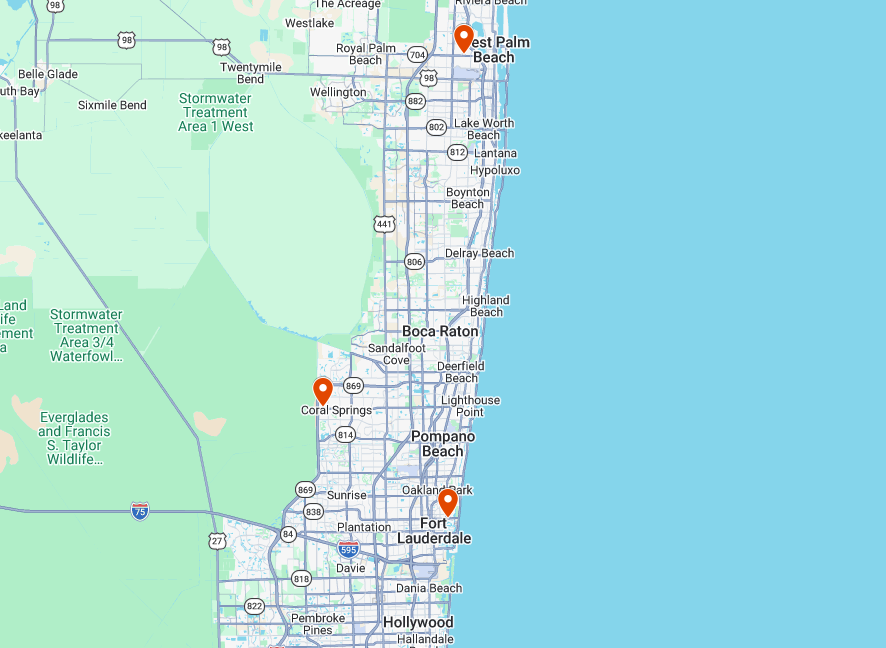
Phone: 561-462-4968