Why North Lauderdale Homeowners Choose Hoffer
The call into Hoffer from a North Lauderdale homeowner is usually one of three things — a scatter of termite wings on the kitchen tile, an ant trail from a foundation crack to the dog’s water bowl, or a roof rat scratching above the bedroom ceiling. What they want on the line is a team that has walked enough 1970s and 1980s CBS slab homes on this side of central Broward to know which entry points fail first.
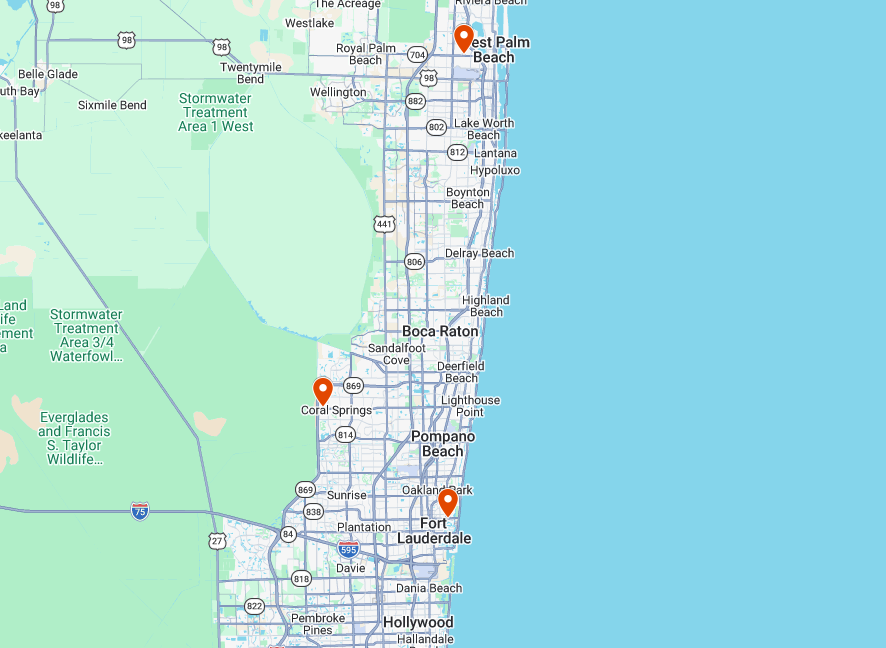
The technicians dispatched into North Lauderdale come out of the same Coral Springs office that serves Tamarac, Margate, Coconut Creek, Lauderhill, and Lauderdale Lakes — same team, same routing.
A few things that come standard
- 50+ years of pest control in Palm Beach, Broward, and Miami-Dade counties.
- ACE-credentialed leadership — Associate Certified Entomologist on staff and reviewing the work.
- Same-day service available when you call early enough in the day; we’ll always tell you straight whether we can fit you in today or first thing tomorrow.
- Free inspection before you commit to anything — including a real walk of the slab line, soffits, and lanai, not a five-minute drive-by.
- Satisfaction guarantee between visits. If something comes back, so do we.
- 4,000+ five-star reviews across South Florida.
- Family- and pet-safe treatments — targeted to entry points and pressure zones, applied with the kids, the dogs, and the grandkids in mind.
Termite Control in North Lauderdale
Termite work in North Lauderdale tracks the housing stock honestly. Most of the inventory is single-family CBS built between 1970 and 1999 with wood-truss roof systems and slab-on-grade foundations. Cryptotermes brevis and Incisitermes snyderi — the two drywood species at work here — push through attic vent gaps and around eave returns; alates swarm late April into July and leave a scatter of clear discarded wings on a window sill or a thin cone of frass at a baseboard.
The subterranean story is different. Eastern subterranean (Reticulitermes flavipes) is the native species at work across inland Broward, and Formosan (Coptotermes formosanus) has been confirmed in the county since the 1990s and shows up where heavy irrigation or canal-edge moisture keeps the soil saturated. Both find slabs through the same routes — expansion joints, plumbing penetrations, and the soil-to-foundation contact line where landscape beds press against the house.
When drywood activity is contained to a single fascia or one localized gallery, no-tent and spot protocols handle it. When the attic walk shows activity has spread across enough framing that spot work cannot reach all of it, whole-structure fumigation is what the findings support. Subterranean termites get treated with liquid termiticide applied to the soil around the foundation, with in-ground bait stations placed along the slab as the long-term monitoring layer. Read more about our termite control services.
Mosquito Control in North Lauderdale
North Lauderdale sits inside the C-13 Canal drainage basin — a low, flat stretch of inland Broward that depends on canals, retention ponds, and pump stations to move stormwater off the streets. The pond at the back of the development, the canal edge at the end of the street, and the gutter that has not been cleaned since spring are all the same thing as far as a mosquito is concerned.
From June through October, three- and four-day rain stretches keep those low spots wet enough that backyard living gets uncomfortable in a hurry — kids drift inside by 6 p.m., patio dinner gets cut short. A bite count rising at sunset means the program needs both a larvicide pass on standing water on the parcel and a fog of the resting vegetation where adult mosquitoes shelter through the day. Hoffer’s mosquito control program handles both halves on the same visit.
Ant Control in North Lauderdale
The ant call from a North Lauderdale address usually looks like a moisture problem before it looks like an ant problem. A pencil-thin trail of pale, almost-translucent workers running the caulk line behind a bathroom vanity or threading a kitchen backsplash is ghost ants (Tapinoma melanocephalum), reading the humidity gradient where CBS slab construction meets the interior wall plate. Larger black ants in attic insulation under a soffit corner that has stayed wet since the last tropical wave are carpenter ants (Camponotus floridanus), working the softened truss lumber underneath. Fire ants pressing in at the front step have their own section below — that call is about kids and the response is different.
The C-13 basin keeps inland humidity high enough year-round that a ghost ant colony in a landscape bed can read a continuous moisture line through an expansion gap to the counter, which is why spraying the visible trail reroutes the colony into the next wall cavity. The program runs a non-repellent at the trail, treats the slab line where the colony is staged, and flags the wet point for the homeowner. Carpenter ant work runs in reverse: find the softened wood first — a soffit return dripping after every storm, a bath-fan vent leaking into a truss bay — and the structural cause goes in the inspection report alongside the chemical treatment. Read more about our ant control services.
Rodent Control in North Lauderdale
Roof rats (Rattus rattus) drive most of the rodent calls into North Lauderdale, and the 1970s and 1980s single-family inventory in the SW 40th Avenue corridor and around Hampton Hills gives them the setup they like: wood-truss attic spaces, soffit-to-fascia gaps that widen with every decade of thermal cycling, and roof penetrations around plumbing vents and HVAC chases that were sized for 1970s building practices and never re-sealed. The mature canopy trees in the older neighborhoods let a rat step from an oak branch directly onto the roof.
The noticeable indoor activity — scratching in the attic, droppings on a garage shelf, gnawed insulation around a soffit — picks up from late October into January as overnight lows drop and the attics become more inviting than the yard. Hoffer’s rodent control program leads with exclusion: walking the roofline, mapping every entry, and sealing the openings before the trapping side of the program goes in. Exterior stations and interior monitoring run alongside through the active season.
Cockroach Control in North Lauderdale
Two roach species generate most of the calls. German cockroaches (Blattella germanica) are the small indoor species that breeds inside the structure itself — they almost never come from the yard, and they spread between shared-wall units in the apartments around Hampton Pines Park and the older condo footprints in The Hamptons through plumbing chases and the gap under a refrigerator. American cockroaches (the palmetto bugs) are the large outdoor species that lives along the C-13 Canal edges and inside the storm-drain network, then comes pushing toward the house after the rain floods their harborage.
German cockroach work runs on a combination of baits and insect growth regulators placed exactly where the population shelters — the toe-kick under the cabinets, the void behind the dishwasher, the back of the lower drawer next to the stove. Over-the-counter sprays scatter the colony and the population reinfests within a few weeks. The American cockroach response is exterior-driven: perimeter treatment, harborage reduction around the slab line, and a sealing pass on garage door seals and door sweeps. Read more about our cockroach control services.
Pest Pressure Specific to North Lauderdale
Fire Ants at the Foundation Line of Aging North Lauderdale Homes
The fire ant call here almost never starts with a yard. It starts at the front step. A parent in the Hampton Hills area watches a kid get stung on the way to the school bus. A homeowner on an SW 40th Avenue block notices a sandy mound two feet from the porch column. Someone in Hamptons West sees red ants threading along the foundation seam of a patio poured in the 1970s.
Red imported fire ants (Solenopsis invicta) are everywhere in South Florida, but North Lauderdale concentrates them at the structure perimeter for a specific reason. The dominant housing stock went up between 1970 and 1999 — CBS slab construction, four to five decades old — and a meaningful share of that inventory has fine hairline cracks at the slab edge and weather-aged seals around plumbing penetrations. Combine that with the sandy substrates fire ants thrive in, irrigation that keeps landscape beds against the foundation consistently moist, and a family demographic with children in the home, and the colonies set up where the kids walk.
The program treats the perimeter, not just the lawn. A perimeter barrier along the foundation kills foraging workers before they reach the cracks. Granular bait in active landscape beds is carried back to the queens, taking the colony down over seven to fourteen days. Active mounds within ten feet of entry doors get direct drench treatment, and the inspection identifies the foundation cracks the colony was using to come inside.




Hoffer Pest Solutions — Serving North Lauderdale For 50+ Years
Hoffer Pest Solutions has been on these streets — The Hamptons, Hampton Pines, Hampton Hills, the SW 40th Avenue blocks, the older sections of Broadview Country Club Estates — for more than fifty years. The programs that work in North Lauderdale are not lifted out of a national playbook. They are built around what an honest inspection actually finds in a 1970s CBS slab home: where the fire ants set up, where the drywood termites swarmed last spring, which soffit corner the roof rats are using as their access point this winter. An Associate Certified Entomologist reviews every program, the inspection is a walk of the property before anything is written, and the satisfaction guarantee runs between scheduled visits if something comes back.
The same Coral Springs team covers Broward County, including the cluster of inland cities that wraps North Lauderdale on every side.
Call 954-892-5742 or request a free inspection. Most North Lauderdale calls can be on the same-day schedule when they come in by mid-morning.
Contact Hoffer Pest Solutions
Hoffer Pest Solutions
12329 NW 35th St
Coral Springs, FL 33065
954-892-5742
Frequently Asked Questions
How do fire ants get inside North Lauderdale homes built in the 1970s and 1980s?
Through the foundation, not the front door. The CBS slab homes along SW 40th Avenue and in Hampton Hills have four to five decades of weather and soil movement against the foundation, leaving fine hairline cracks at the slab edge and weather-aged seals around plumbing penetrations. Fire ant colonies in landscape beds against the house follow those gaps inward, so the fix has to address both the colony and the entry point.
Why are fire ants more of a problem near my foundation than out in the yard?
The conditions stack at the structure. Irrigation keeps the sandy substrate fire ants prefer at the right moisture year-round, the foundation holds humidity, and a 40- to 50-year-old CBS slab gives the colony shelter and a way indoors. A colony out in the lawn is a mowing nuisance; a colony three feet from the porch is a structural problem and a family-safety issue at the same time.
Why do homes near the canals see more mosquitoes and palmetto bugs?
North Lauderdale sits in the C-13 Canal drainage basin. Mosquitoes hatch in the standing water; American cockroaches harbor in the wet edges and storm-drain grates. When a three-day rain stretch saturates that infrastructure, both populations move toward the nearest dry structure. A perimeter program plus a sealing pass on slab gaps and door sweeps cuts the indoor exposure down meaningfully.
What termite species should North Lauderdale homeowners actually worry about?
Three. Drywood termites (Cryptotermes brevis and Incisitermes snyderi) drive the pressure on wood roof systems, fascia, and decorative trim on the 1970s and 1980s housing stock; alates swarm late April through July. Eastern subterranean (Reticulitermes flavipes) is the regional baseline across central Broward, and Formosan subterranean (Coptotermes formosanus) — documented in Broward since the 1990s — is the more aggressive colony builder on properties with heavy irrigation or canal proximity.
Is whole-structure fumigation available for drywood termites, or only spot treatment?
Both. Contained activity — a single fascia gallery, one isolated frass cone — handles cleanly with no-tent or spot protocols. When the attic walk shows the population has spread across enough framing that spot work cannot reach all of it, whole-structure fumigation is the standard escalation. On a 1975 ranch with five decades of attic exposure to swarming alates, that is sometimes the call the findings actually support.
What pest challenges do North Lauderdale's condos and apartments face that single-family homes don't?
Shared-wall migration. The inventory at The Hamptons, Hamptons West, The Lauderdale at Hampton Pines, and the older Broadview Country Club Estates buildings shares plumbing chases, electrical conduits, and HVAC runs across units. German cockroaches cycle between kitchens; bed bugs from one turnover spread before management knows. Single-unit treatment rarely holds. Hoffer coordinates with HOA boards and property managers to treat affected and adjacent units in a single visit window.
When is mosquito pressure worst in North Lauderdale?
June through October. Afternoon thunderstorms refill canal edges, retention ponds, and backyard container breeders (bromeliad cups, plant saucers, clogged gutters) on a multi-day cycle. Peak weeks run late July through September, when humidity will not let standing water dry off between storms.
How fast can the team get out to North Lauderdale?
Same-day service is usually available. The Coral Springs route handles North Lauderdale every day, so dispatch can almost always put a technician on the schedule for that afternoon if the call comes in by mid-morning. A first-time inspection includes a written walk-through so the homeowner has the findings on paper before any agreement is signed.
Are Hoffer's treatments safe to apply around children and pets?
Yes. The treatments are chosen and placed to keep the active ingredient where the pest is, not where the family lives. Interior product goes into the structural voids the pest is actually using — behind cabinetry, under the dishwasher, into the slab edge where wall meets floor — so children and pets are not crossing treated surfaces during their day. Fire ant work specifically gets calibrated to the perimeter zones around entry doors and play areas, because that is where the sting risk lives.
Is Hoffer Pest Solutions the right company for pest control in North Lauderdale?
For the mix of properties North Lauderdale carries — the 1970s and 1980s CBS single-family in Hampton Hills and along SW 40th Avenue, the older condos in The Hamptons and Hamptons West, the apartments around Hampton Pines Park, and the variety inside Broadview Country Club Estates — the right pest control company is one that has actually worked all of those property classes here for decades. Hoffer has, with an Associate Certified Entomologist reviewing every program, a satisfaction guarantee between visits, and a service profile built for the family demographic these neighborhoods house.