Why Pembroke Park Homeowners Call Hoffer First
There’s a reason palmetto bugs show up on the kitchen floor the morning after a heavy rain in Pembroke Park, and it isn’t bad luck. The town sits inside the C-9 Canal drainage basin — a low, flat stretch of southern Broward that depends on managed canal flow, retention pools, and storm sewers to move water off the streets after every wet-season downpour. Those drains and culverts are also where American cockroaches harbor, and when the system overflows or saturates, those roaches push inland through plumbing penetrations into homes that sit slab-on-grade. That is the local pest equation worth understanding before the next thunderstorm rolls through.
Hoffer Pest Solutions works the full Pembroke Park footprint — the CBS single-family blocks south of Pembroke Road, the manufactured-home community at Bamboo Paradise on Gloria Lane, the apartment inventory north of Hallandale Beach Boulevard, and the warehouse and retail tenants along the Hallandale Beach Boulevard commercial frontage from SW 31st Avenue to the I-95 ramps. Each property type has its own pest profile. Manufactured homes draw rodents and roaches up through skirting and undercarriage plumbing. Mid-century CBS single-family pulls drywood termites into wood-truss roofs and fascia. Apartment kitchens cycle German roaches between units. Warehouse loading docks pull in rodents and stored-product pests. None of that is hypothetical. It’s what the calls actually look like.
Reach the team at 954-945-8035 or request a free quote.
Why Pembroke Park Homeowners Choose Hoffer
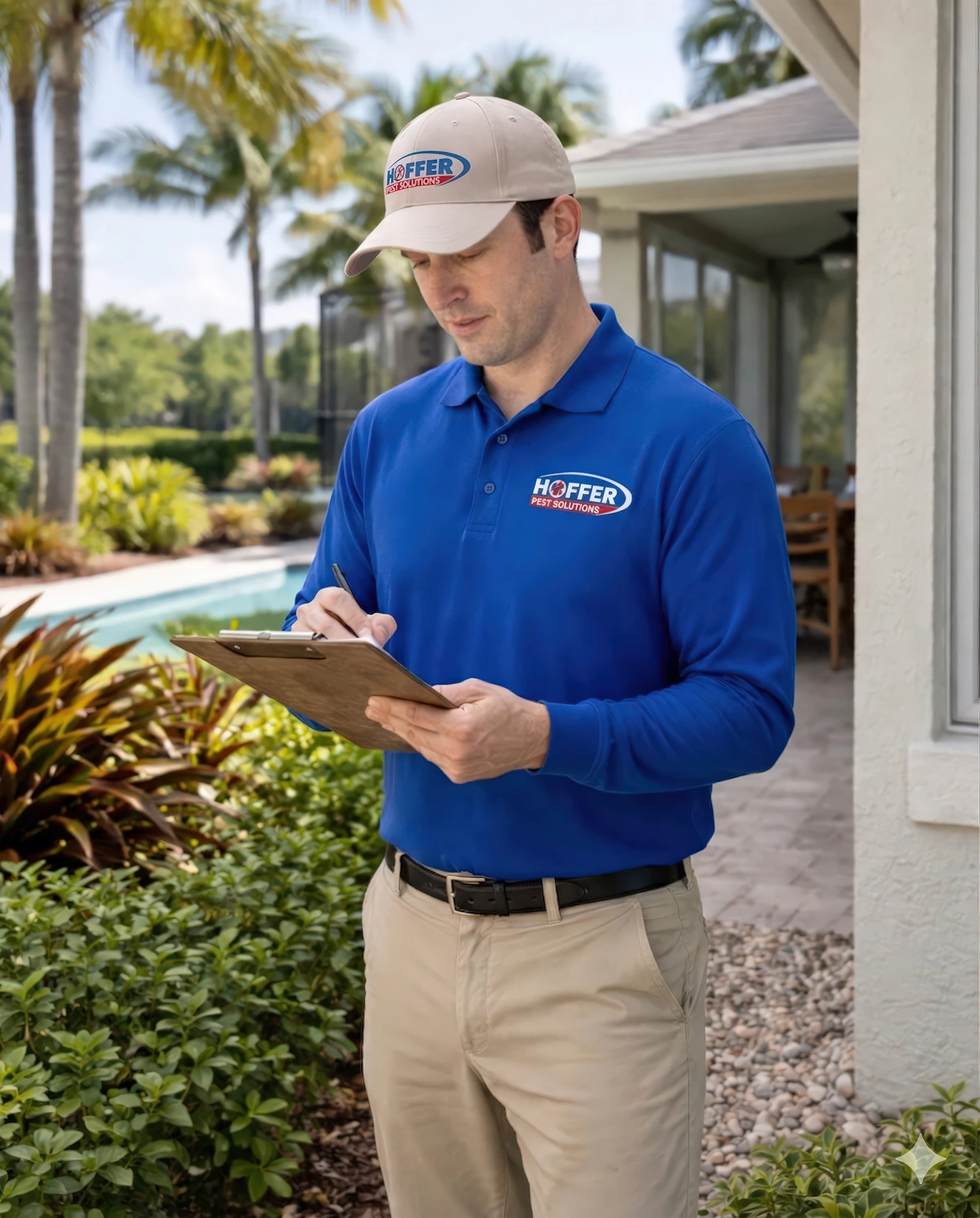
A homeowner on Gloria Lane and a warehouse manager on SW 31st Avenue do not have the same pest problem, but they have the same question: who actually understands this property and shows up when they said they would. That is the wedge for Hoffer Pest Solutions in Pembroke Park. The team has worked southern Broward long enough to know which questions to ask at the door of a manufactured home (does the skirting seal, where do the supply lines come in, is there standing water under the trailer after rain), which questions to ask at a 1960s CBS single-family (what does the attic look like, where does the soffit detailing run, is there visible drywood frass on the windowsill), and which questions to ask at a multi-tenant warehouse (which bay sees the most rodent activity, what is the sanitation cadence in the break rooms, is documentation needed for an insurance audit). Different questions, same crew.
That depth comes from running pest programs across Pembroke Park’s adjacent footprint for decades — work in Hallandale Beach to the east and Hollywood to the south sits on the same C-9 basin, with the same slab-on-grade construction patterns and the same drain-driven palmetto bug pressure. Pembroke Park reads the same way once you know what to look at.
A few things that come standard
- 50+ years of pest control in Palm Beach, Broward, and Miami-Dade counties.
- ACE-credentialed leadership — Associate Certified Entomologist on staff and reviewing the work.
- Same-day service available when you call early enough in the day; we’ll always tell you straight whether we can fit you in today or first thing tomorrow.
- Free inspection before you commit to anything — including a real walk of the slab line, soffits, screens, and perimeter, not a five-minute drive-by.
- Satisfaction guarantee between visits. If something comes back, so do we.
- 4,000+ five-star reviews across South Florida.
- Family- and pet-safe treatments — targeted to entry points and pressure zones, applied with the kids, the grandkids, and the dogs in mind.
Termite Control in Pembroke Park
Drywood termites do their work overhead in this town. The 1950s–1970s CBS single-family inventory south of Pembroke Road was built before sealed-truss roof construction became standard, which means wood-truss systems, wood fascia, wood soffit detailing, and sometimes wood-frame window framing — every one of which is on the menu for drywood swarmers during the April-through-summer flight season. The manufactured homes at Bamboo Paradise and across the broader Pembroke Park mobile-home inventory have their own drywood exposure points: wood window framing, wood trim, exterior fascia detailing on permanent additions, and the wood superstructure components specific to manufactured construction. Hoffer’s inspection walks the roofline, the soffit returns, the exterior fascia, and the interior trim before any treatment recommendation is made.
Subterranean termite pressure is the other side of the picture. Eastern subterranean (Reticulitermes flavipes) is the regional baseline across Broward, and Formosan subterranean (Coptotermes formosanus) has been documented across southern Broward since the 1990s — both species exploit the slab-on-grade construction that dominates Pembroke Park’s housing stock and the consistent soil moisture the C-9 basin delivers. Treatment matches the species and the severity. Contained drywood activity is usually handled with localized or no-tent protocols. Tent fumigation is available when an infestation has spread through enough of a roof system or interior wood to make localized work inadequate — and Hoffer runs it when that’s the call. Subterranean work centers on continuous soil-applied termiticide barriers and in-ground bait stations along the slab perimeter.
Mosquito Control in Pembroke Park
Mosquito pressure in Pembroke Park is driven by the canal grid the town sits inside. The C-9 (Snake Creek) basin moves stormwater through a network of canals, retention pools, and culverts that hold standing water across the rainy months from June through October — exactly the cycle Aedes and Culex mosquitoes need to produce successive generations through the back half of summer. A backyard on a CBS slab single-family north of Pembroke Road can be carrying its own breeding sites on top of that: clogged gutters draining into mulched beds, plant saucers under landscape pots, a swale that holds water for forty-eight hours after a thunderstorm. A manufactured home in Bamboo Paradise can have undercarriage areas that pool water against the chassis. Container-breeder mosquitoes do not need much.
Hoffer’s mosquito program treats the vegetated harborage at the property edge — landscape beds, the underside of canopy, hedge interiors — where adult mosquitoes rest during the day, and identifies and corrects the standing-water sources on the parcel itself. The goal is a back patio, a side yard, or a porch a family can actually use during wet season without retreating indoors at sundown. Treatment placement is timed for safe re-entry by kids and pets.
Ant Control in Pembroke Park
Two ant problems run through Pembroke Park homes. Ghost ants — the tiny, pale, sweet-feeding ants that trail across kitchen counters and around bathroom sinks — exploit the hairline gaps where slab meets wall plate in mid-century CBS construction. Once a colony is in those wall voids, surface spray on the trail accomplishes very little; the colony stays put and rebuilds the trail within a day. Carpenter ants show up in homes with wood components carrying chronic moisture — a soffit return where the roof valley has dripped for a decade, a window frame where the caulk gave up two summers ago, an exterior trim board against a leaky downspout. Both species need to be tracked back to harborage before treatment.
Manufactured homes carry a third pattern. The plumbing penetrations under a mobile home — where the supply line and the drain line enter the underside of the structure — are common ant entry points, and skirting gaps let foraging trails establish along the underside of the floor system. Hoffer’s ant work pulls activity back to source before non-repellent placement is set, and exterior perimeter treatment closes the trails moving in from outside.
Rodent Control in Pembroke Park
Rodent pressure in Pembroke Park splits cleanly by property type. Roof rats — the climbing rodent species that dominates urban Broward — move through attic spaces and soffit gaps in the older single-family and apartment inventory. They follow utility lines, citrus branches, and overhanging canopy to access points around vent flashings and the joint between the roof deck and the fascia. Activity peaks in the cooler stretch from late October into the new year, when overnight temperatures push them indoors looking for sheltered nesting.
Manufactured homes carry a different rodent profile. The undercarriage of a mobile home is exposed unless the skirting is intact and sealed all the way around, and the supply-line and drain-line penetrations through the floor system are sized for plumbing, not for keeping a Norway rat out. Bamboo Paradise and the rest of the Pembroke Park mobile-home inventory sees skirting failures, gnaw damage at access panels, and rodent activity that establishes under the structure before it gets noticed inside. Hoffer’s rodent work starts with an exclusion inspection — finding the openings and sealing them — and pairs that with tamper-resistant exterior stations and interior monitoring so the inside problem doesn’t re-establish from the outside.
Pest Pressure Specific to Pembroke Park
Beyond the standard southern Broward lineup, Pembroke Park carries a specific outdoor-to-indoor cockroach pressure that comes straight out of how the town drains. The C-9 (Snake Creek) Canal basin, the slab construction the housing stock was built on, and the municipal sewer grid all converge on one species in particular — and the calls follow the rain.
American Cockroaches Along the C-9 Drainage Basin
American cockroaches — the large, reddish-brown roaches Floridians call palmetto bugs — are an outdoor species first and an indoor visitor second. In Pembroke Park, they harbor in canal banks, retention-pool edges, sewer vents, and the moist exterior margins of slab foundations across the C-9 basin. When a wet-season storm overwhelms the drainage grid, displaced adults push toward dry shelter — and the slab-on-grade construction that defines the local housing stock gives them a direct route in. They enter through floor drains in laundry rooms and garages, through bathtub overflows, through gaps where supply lines penetrate the slab, and (in the manufactured-home inventory anchored at Bamboo Paradise) up through the underside of the floor system where drain and supply lines run beneath the chassis. Identification is straightforward: a one-and-a-half to two-inch reddish-brown roach, often seen flying near a porch light or moving fast across a garage floor after rain.
Hoffer’s program for palmetto bug pressure works exterior-first: residual perimeter treatment on the slab line and at every utility entry point, drain treatment in interior fixtures with recurring activity, moisture-source review on the parcel, and (for manufactured-home properties) inspection of the undercarriage and skirting where the structural exposure is widest. The goal is the same in any structure — stop the entry route, not just kill the roach the homeowner already saw.




Contact Hoffer Pest Solutions
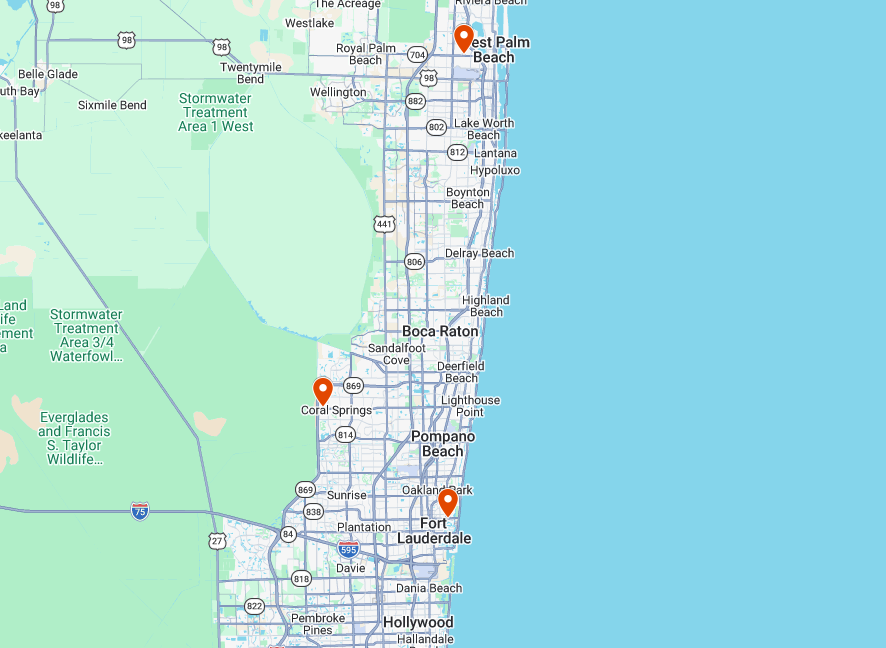
Hoffer Pest Solutions has worked Pembroke Park’s full property mix — the CBS single-family blocks, the manufactured-home community on Gloria Lane, the apartment inventory north of Pembroke Road, and the warehouse and retail tenants along the Hallandale Beach Boulevard corridor — for long enough to know how each one fails, and what the inspection has to cover before any program goes in writing. The credentials behind the work: more than fifty years of southern Broward pest experience, an Associate Certified Entomologist (ACE) reviewing the program, a full walking inspection of structure, perimeter, and entry points before any agreement, documentation routed to whichever contact the homeowner or property manager designates, treatment placement calibrated for kids, grandkids, and pets in the home, and a satisfaction guarantee that holds between scheduled visits.
Reach the team at 954-945-8035 or request a free quote online.
Hoffer Pest Solutions
1975 E Sunrise Blvd #503
Fort Lauderdale, FL 33304
954-945-8035
Frequently Asked Questions — Pest Control in Pembroke Park, FL
Why do palmetto bugs show up after heavy rain in Pembroke Park?
Pembroke Park sits inside the C-9 Canal drainage basin, and the canals, retention pools, and storm sewers that move stormwater through the town are also where American cockroaches harbor outdoors. When a wet-season storm overwhelms the drainage grid, displaced adults push toward the nearest dry shelter — usually a slab-on-grade home — and enter through floor drains, bathtub overflows, and gaps around supply-line penetrations. Killing the one on the floor doesn’t fix it; closing the entry route does. Hoffer’s palmetto bug work treats the exterior slab perimeter, the utility penetrations, and the interior drains where the activity is showing up.
Do you treat manufactured homes and mobile-home parks like Bamboo Paradise?
Yes. Manufactured homes have a different pest-entry profile than CBS single-family, and the inspection runs differently. Skirting condition, undercarriage access, the plumbing penetrations on the underside of the floor system, and standing water against the chassis after rain are all part of the walkthrough. Treatment placement matches the construction — exterior perimeter at the skirting line, undercarriage perimeter where the structural exposure is widest, and interior placement calibrated for kids, grandkids, and pets in the home. Recurring service is structured the same way it is for any single-family property.
Can you treat the undercarriage and skirting on a mobile home?
Yes — that’s where most of the structural exposure on a manufactured home is. Skirting gaps let rodents establish under the structure before activity gets noticed inside. The drain-line and supply-line penetrations through the floor system are sized for plumbing and don’t keep roaches or rodents out. The team walks the perimeter, identifies the openings that need sealing, and pairs exclusion with residual treatment along the undercarriage and skirting line. If the skirting is too damaged to seal effectively, that’s flagged in writing so the homeowner can coordinate the repair before the treatment cycle re-runs.
Does Hoffer provide commercial pest control for businesses along Hallandale Beach Boulevard?
Yes. The Hallandale Beach Boulevard corridor — including the warehouse inventory along the Kelsey Group industrial park and the multi-tenant office and retail frontage between SW 31st Avenue and the I-95 ramps — is in service. Commercial programs cover stored-product pest management for warehouses, German and American cockroach prevention in break rooms and restrooms, rodent exclusion at loading docks and roll-up door seals, and documentation for insurance audits, food-safety inspections, or property-manager records. The single commercial vertical Hoffer does not service is stand-alone restaurants.
When is termite swarming season in Pembroke Park, and what should I be watching for?
Drywood termite swarms run from spring into mid-summer — broadly April through July in southern Broward. Swarmers are drawn to lights at dusk, and the first thing most homeowners notice the next morning is a small pile of discarded wings on a windowsill, a tile floor near a sliding door, or a porch light fixture. In the 1950s–1970s CBS housing stock common in Pembroke Park, the wood-truss roof systems, fascia, and soffit detailing are the most likely targets. Subterranean termite activity is year-round; mud tubes on slab walls, garage walls, or expansion joints are the visible sign worth inspecting.
Is tent fumigation an option in Pembroke Park, or only spot treatment?
Tent fumigation is on the menu when the inspection findings show the activity is too dispersed for localized treatment to be effective. The inspection report walks through what was found and which treatment matches the situation.
What's the difference between Eastern and Formosan subterranean termites, and which is in this part of Broward?
Eastern subterranean (Reticulitermes flavipes) is the species that has historically dominated Broward — colonies typically range from tens of thousands to several hundred thousand workers, and damage progresses at a measured pace. Formosan subterranean (Coptotermes formosanus) has been documented across southern Broward since the 1990s — colonies can run into the millions, build aboveground carton nests that hold their own moisture, and cause damage on a faster timeline. Both species show up in this part of the county. Treatment for either centers on continuous soil-applied termiticide barriers and in-ground bait stations; severity drives the cadence of follow-up inspection.
Are the treatments safe for kids and pets in the house?
The standard of care is placement, not broadcast spraying. Interior product goes into cracks, crevices, and structural voids — areas behind appliances, along baseboards, and inside wall plates — where the active ingredient sits against pest harborage and stays out of family living surfaces. Exterior liquid work has a documented re-entry window written on the service ticket, so the homeowner knows exactly when kids and pets can be back on the patio, in the yard, or on the porch. Exterior rodent stations along the perimeter are locked, tamper-resistant designs that a child or a dog can’t open.
How often should I schedule pest control service if I live in a Pembroke Park mobile-home park?
For manufactured-home properties, a quarterly recurring program is the typical baseline — the structural exposure points (skirting, undercarriage plumbing penetrations, thinner wall assemblies) reopen pressure faster than they do on sealed CBS construction, so the recheck cadence is shorter than the ‘twice a year’ schedule that works for some inland properties. Recurring visits include exterior perimeter at the skirting line, interior monitoring, and a re-inspection of the undercarriage entry points the original walkthrough identified. The satisfaction guarantee covers re-treatment between scheduled visits if activity returns.
Which neighborhoods near Pembroke Park does Hoffer serve?
The Fort Lauderdale office covers Pembroke Park and the surrounding southern Broward footprint, including Hallandale Beach to the east and Hollywood to the south. The same C-9 basin drives a lot of the same pest pressure across those city lines, and the routing schedule covers all three on overlapping days. Same-day service is available when calls come in early enough in the day to fit the route.