Pest Control in Lauderdale Lakes
Three calls land in the same week and tell the story of Lauderdale Lakes pest pressure in three different shapes. A homeowner in Oakland Estates finds a small pile of pinhead-sized pellets under a baseboard and notices the wood next to it sounds hollow when tapped. A condo manager at Hawaiian Gardens watches the same tiny yellow ants appear in three units of the same building inside ten days, and an over-the-counter spray a resident applied last month has somehow made the trail longer. A property manager along State Road 7 takes a tenant complaint from a medical office because cockroach activity in the break room is visible to patients. Those are three different pest equations from three sides of the same city — the older single-family ranches, the multi-building condo communities built around 1969, and the commercial corridor that carries 50,000 vehicles a day.
Hoffer Pest Solutions has worked the inland Broward corridor — every era of housing stock, from owner-occupied bungalow to 44-building condo community to four-story office — for more than fifty years. Call 954-892-5742 or request a free inspection and the team is out the same day in most cases, with a written report that names what was found and what the program covers before any agreement is signed.
Why Lauderdale Lakes Homeowners, Condo Associations, and Commercial Property Managers Choose Hoffer
Lauderdale Lakes does not pick up the phone with one question. An Oakland Estates homeowner asks a different question than a Hawaiian Gardens HOA board, and both ask a different question than a commercial property manager handling a four-story office on State Road 7. What ties the three calls together is the same expectation: someone on the other end has actually walked this kind of property in this part of Broward enough times to know what fails first.
Lauderdale Lakes incorporated in 1961 and was calling itself the Heart of Broward County by the time most of its housing stock — the 1969 Hawaiian Gardens phases, the 1960s Oakland Estates ranches, the 1970s mid-rise along Oakland Park Boulevard — was going up. The pest pressure inside those addresses reflects sixty years of buildout: drywood activity in the wood roof framing on slab-on-grade ranches, Pharaoh ant supercolonies threading through shared walls in the 44-building condo communities, and the commercial pest profile that comes with multi-tenant office, retail, and medical along a 50,000-vehicle-a-day corridor. That pest-pressure profile continues east into our Oakland Park pest control service area and west into our Lauderhill pest control service area, where the housing stock and commercial corridors share similar construction patterns and drainage infrastructure.
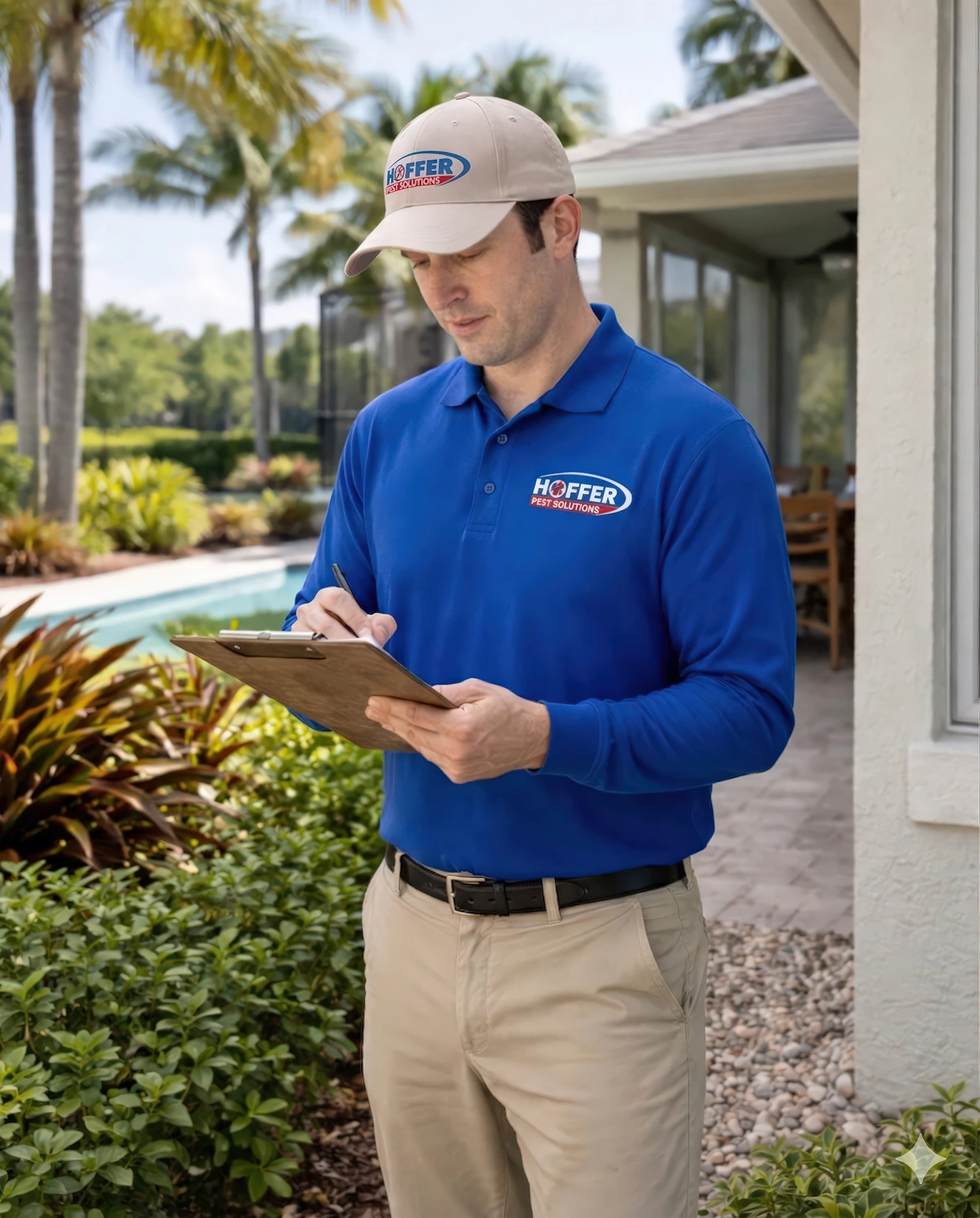
The team that arrives on a Lauderdale Lakes call brings: more than fifty years of work across Palm Beach, Broward, and Miami-Dade; an Associate Certified Entomologist (ACE) signing off on every program; a walking inspection covering roofline, soffit, slab perimeter, and — for condos and commercial — shared mechanical chases before any agreement is written; treatment placement built around the family-and-pet reality of the home; documented service records; and a satisfaction guarantee that holds between scheduled visits.
A few things that come standard
- 50+ years of pest control in Palm Beach, Broward, and Miami-Dade counties.
- ACE-credentialed leadership — Associate Certified Entomologist on staff and reviewing the work.
- Same-day service available when you call early enough in the day; we’ll always tell you straight whether we can fit you in today or first thing tomorrow.
- Free inspection before you commit to anything — including a real walk of the slab line, soffits, screens, and perimeter, not a five-minute drive-by.
- Satisfaction guarantee between visits. If something comes back, so do we.
- 4,000+ five-star reviews across South Florida.
- Family- and pet-safe treatments — targeted to entry points and pressure zones, applied with the kids, the grandkids, and the dogs in mind.
Termite Control in Lauderdale Lakes
Lauderdale Lakes termite work tracks the city’s two structural realities. The first is drywood. Most homes in Oakland Estates and most of the 44 Hawaiian Gardens buildings went up in the 1960s and early 1970s with wood roof systems over CBS walls — rafters, fascia, and soffit lumber that Cryptotermes brevis and Incisitermes snyderi have been finding through attic vents for sixty years. Swarming runs April into July; homeowners who catch it first see a scatter of clear discarded wings on a windowsill or a thin cone of frass tracking out of a baseboard joint.
The second is subterranean. Eastern subterranean (Reticulitermes flavipes) is the regional baseline, and Formosan (Coptotermes formosanus) has been documented across southern Broward since the 1990s. Both exploit the high water table the C-13 drainage system maintains. Containable drywood activity runs on localized or no-tent protocols. Whole-structure fumigation is brought in when an attic inspection shows the activity has dispersed past the reach of spot work. Subterranean programs run on soil-applied termiticide barriers and in-ground bait stations along the slab perimeter.
Mosquito Control in Lauderdale Lakes
Lauderdale Lakes is an inland city carved out of a flat, low-elevation grid that depends on the C-13 Canal, neighborhood retention ponds, and SFWMD drawdowns to move stormwater. The name “Lauderdale Lakes” comes from that engineered network, not from coastal water. When the rainy season runs from June through October, three- and four-day rain stretches fill retention edges, golf-course irrigation low spots around the Lauderdale Lakes Country Club, and the small backyard container breeders that drive most residential mosquito calls — bromeliad cups, plant saucers, tarped gear, the gutter clogged since spring.
A bite count rising at 6 p.m. is a sign the program needs a larvicide pass on the standing water on the parcel plus a fog of the resting vegetation where adult mosquitoes shelter during the day. Hoffer’s mosquito program handles both halves on the same visit.
Ant Control in Lauderdale Lakes
Two ant species drive most of the standard residential ant work in Lauderdale Lakes. Ghost ants (Tapinoma melanocephalum) are the pale, almost-translucent trailing ants residents catch running across kitchen counters and along bathroom caulk lines — they follow the moisture gradients of CBS slab construction and trail in from soil-line vegetation through expansion gaps. Carpenter ants (Camponotus floridanus) are the larger black or bicolored ants excavating galleries inside moisture-damaged wood-truss components in 1960s and 1970s Oakland Estates attics, anywhere a slow roof leak or a chronically wet gutter has softened the wood.
Pharaoh ants — the third species concentrated here — behave nothing like the other two and are covered in the Local Pressure Spotlight below. For ghost and carpenter calls, the program treats interior trail and exterior origin together: perimeter and entry-point work along the slab, targeted interior placement at trails, and a moisture review on the conditions that brought the colony in.
Rodent Control in Lauderdale Lakes
Rodent pressure in Lauderdale Lakes is roof-rat pressure first. Roof rats (Rattus rattus) are the climbing species that dominates urban Broward, and the older ranches in Oakland Estates plus the mid-rise condos off Oakland Park Boulevard are the inventory they exploit: wood-truss attic spaces, soffit-to-fascia gaps that have widened across six decades, and roof penetrations around plumbing vents, HVAC chases, and cable runs sized for 1960s and 1970s standards and never re-sealed. Activity peaks in the cooler stretch from late October into the new year, and mature canopy trees in the older neighborhoods give roof rats easy access from adjacent branches. Hoffer’s rodent program opens with an exclusion inspection — locating and sealing openings on roof, soffit, slab penetration, and utility line — paired with tamper-resistant exterior stations and interior monitoring during the active season.
Cockroach Control in Lauderdale Lakes
Three roach species cover most of what residents and property managers see. German cockroaches (Blattella germanica) are the small light-brown indoor species concentrated in kitchens and bathrooms — they reproduce inside the structure and almost never come from the yard. American cockroaches (Periplaneta americana) are the large reddish-brown “palmetto bugs” that live outdoors along the C-13 Canal edges, in retention pond perimeters, and in sewer infrastructure, then move toward structures after rain events flood them out of harborage. Smokybrown cockroaches (Periplaneta fuliginosa) hide in landscape mulch and palm-frond skirts on the older Oakland Estates lots. German calls run on baits and growth regulators placed inside the harborage — a contact spray reinfests within weeks. American and smokybrown calls run on exterior perimeter treatment, harborage reduction, and a sealing pass on slab and door-sweep gaps.
Pest Pressure Specific to Lauderdale Lakes
Beyond the standard inland-Broward lineup, Lauderdale Lakes carries one pest pressure generated by how the city is housed and where its commerce sits.
Pharaoh Ants Across the Hawaiian Gardens Condo Footprint and the State Road 7 Corridor
Pharaoh ants (Monomorium pharaonis) are tiny — about a sixteenth of an inch, light yellow with a darker abdomen, much smaller than ghost or carpenter ants. Two Lauderdale Lakes realities concentrate them here. The first is interconnected multi-unit housing: Hawaiian Gardens’ phases (Gladiola, Holly, Jonquil, Karisa, and the rest) share walls, plumbing chases, and electrical conduits across 44 buildings, so a colony in one unit threads through those runs into adjacent units. The second is the State Road 7 corridor, where multi-tenant buildings along Lakes Mall, Lauderdale Marketplace, and the Sopher Center give Pharaoh ants the warm, humid indoor environment they need year-round.
The trail is easy to spot: a pencil-thin line of tiny yellow ants along a baseboard or outlet, drawn to both sweets and proteins. The response is where residents go wrong. A contact spray on the visible trail makes the colony bud — it splits into sub-colonies that scatter through wall cavities, so a kitchen trail reappears in the bathroom within a week. Pharaoh ants have to be controlled with slow-acting baits workers carry back to the queens. For shared-wall buildings, Hoffer coordinates baiting across affected and adjacent units with the HOA board; for State Road 7 tenants, placement is discreet and documentation supports medical and retail compliance.




Contact Hoffer Pest Solutions
Hoffer Pest Solutions has worked the inland Broward corridor — from single-family ranches in Oakland Estates to the 44-building Hawaiian Gardens footprint to the multi-tenant offices along State Road 7 — for more than fifty years. Every program has an Associate Certified Entomologist (ACE) reviewing the work. Every property gets a walking inspection before an agreement is written. Every treatment is placed with kids, grandkids, and pets in mind. Every visit is documented for the homeowner or association. And every program is backed by a satisfaction guarantee that holds between scheduled visits.
Call 954-892-5742 or request a free inspection — same-day service is available in most cases.
Hoffer Pest Solutions
12329 NW 35th St
Coral Springs, FL 33065
954-892-5742
Frequently Asked Questions — Pest Control in Lauderdale Lakes, FL
Why are tiny yellow ants showing up in three rooms of my Hawaiian Gardens condo at once?
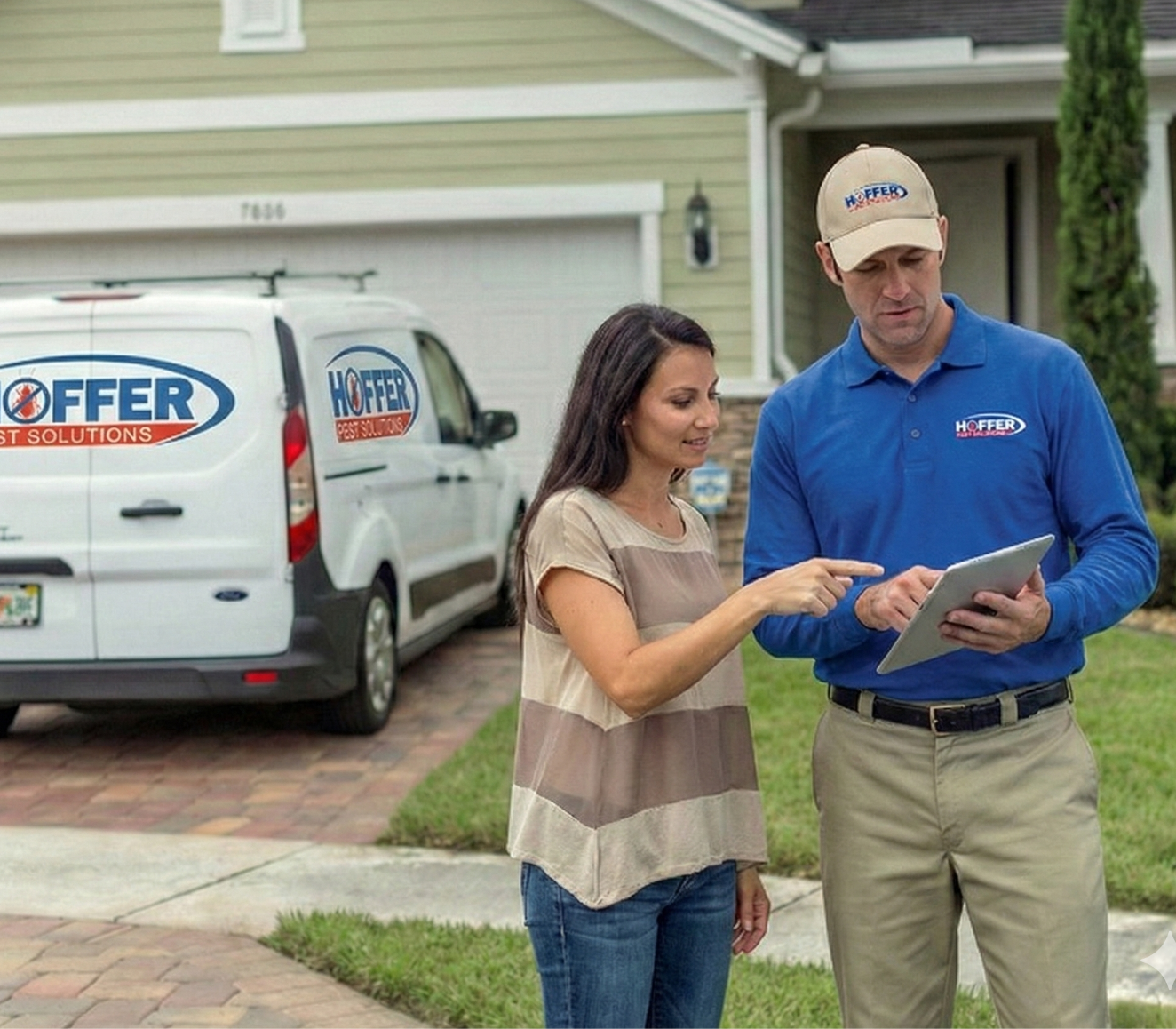
That is the classic Pharaoh ant pattern. The colonies “bud” — they split into sub-colonies when threatened — and many residents trigger the budding by spraying a visible trail with an over-the-counter product. The colony scatters through shared wall cavities and reappears in rooms that were clean a week earlier. The fix is professional baiting, not another spray. Hoffer places slow-acting baits at active trails so workers carry the active ingredient back to the queens, and for Hawaiian Gardens we coordinate adjacent-unit treatment with the building manager.
Does our condo association need building-wide treatment, or can we just treat the affected units?
For Pharaoh ants, German cockroaches, or bed bugs in a shared-wall building, single-unit treatment rarely holds — the population migrates between units through plumbing, electrical, and HVAC chases. Hoffer works directly with HOA boards and property managers at communities like Hawaiian Gardens to schedule coordinated treatment across affected units, adjacent units, and common areas in a single visit window. For pests that do not spread building-wide — most ghost-ant calls, isolated rodent activity — single-unit treatment is appropriate. The inspection identifies the right scope.
What termite species should Lauderdale Lakes homeowners worry about?
Three. Drywood termites (Cryptotermes brevis and Incisitermes snyderi) are the dominant pressure on wood roof systems, fascia, and decorative interior trim of the 1960s-and-1970s ranches and Hawaiian Gardens buildings; alates swarm April through July. Eastern subterranean (Reticulitermes flavipes) is the regional baseline. Formosan subterranean (Coptotermes formosanus) has been documented across Broward since the 1990s and is the more aggressive colony builder. Both subterranean species exploit slab-on-grade foundations and the moisture the C-13 drainage system holds in the soil.
Is whole-structure fumigation available for drywood termites here, or only spot treatment?
Both. The inspection findings drive the decision. When drywood activity is contained — one or two galleries in a fascia run, isolated frass under a single baseboard — localized or no-tent protocols are appropriate. When an attic and roof-system inspection shows the activity has dispersed across enough framing that spot work cannot reach every gallery, whole-structure fumigation is the standard escalation. For a Hawaiian Gardens building or an Oakland Estates ranch with sixty years of attic exposure to swarming alates, fumigation is sometimes what the inspection findings support — and that conversation happens before any agreement is written.
Why do I see more palmetto bugs (American cockroaches) after heavy rain in Lauderdale Lakes?
The C-13 Canal, the neighborhood retention ponds, and the golf-course irrigation around the Lauderdale Lakes Country Club are where American cockroaches live outdoors. They harbor in wet edges, under landscape debris, and along storm-drain grates. When a three-day rain stretch floods those harborage areas, the cockroaches move toward dry structures — which is the house. The spike after a storm is migration, not a new infestation. A perimeter program plus a sealing pass on slab gaps, door sweeps, and utility penetrations cuts the indoor exposure dramatically.
Do State Road 7 commercial properties in Lauderdale Lakes need ongoing pest control contracts?
For multi-tenant office, retail, and medical buildings along State Road 7 — Lakes Mall, Lauderdale Marketplace, the Sopher Center, and the strip retail along the corridor — ongoing service is the standard. Reason one is reputation: visible activity in a tenant space (a Pharaoh ant trail across a medical office counter, a roach sighting in a break room) damages the tenant’s standing with the landlord. Reason two is compliance: medical offices and food-handling retail require documented pest-control records. Hoffer’s commercial program covers monitoring, treatment, and documentation for both.
Are Hoffer's treatments safe to apply around grandkids who visit on weekends?
Yes — placement is built around the family-and-pet reality of the home. Interior product goes into the spaces where pests actually shelter — cabinet voids, behind appliances, the expansion gaps where the slab meets the wall plate, the structural voids in cabinetry kickplates — so the active ingredient sits against the target population rather than across surfaces where the kids and grandkids spend time. Standard dry times are observed before treated areas are walked. Exterior perimeter work is calibrated to drift conditions and dries before pet access.
How fast can the team get to my property in Lauderdale Lakes?
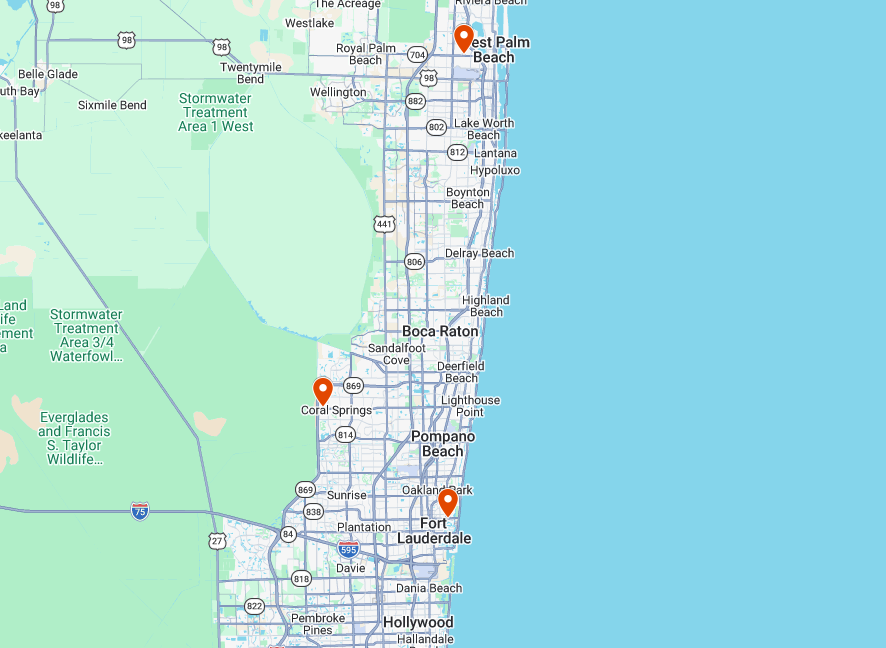
Same-day service is available in most cases. The Coral Springs office covers the inland Broward corridor — Lauderdale Lakes, Lauderhill, Coral Springs, Margate, and the rest — so technicians are on routes through this side of the county every day. Call 954-892-5742 and the dispatcher will confirm the window before dispatch. For first-time inspections, the technician brings a written report off the walk so the homeowner or property manager has the findings before any agreement is signed.
We had a unit sprayed for ants and now there are more ants in the building — what happened?
For Pharaoh ants, that is the budding behavior — contact spray triggers the colony to fragment and scatter through wall cavities. For ghost and carpenter ants, a similar outcome can happen when the spray was applied to the trail without addressing the exterior origin. The fix is a re-inspection that identifies the species, locates the origin, and switches to the right treatment — baits for Pharaoh, perimeter work for ghost and carpenter. Coordinated building-wide treatment is the right scope when adjacent units are reporting activity.
Is Hoffer Pest Solutions the right company for pest control in Lauderdale Lakes?
For the property mix Lauderdale Lakes actually has — single-family ranches in Oakland Estates, the 44-building Hawaiian Gardens footprint, mid-rise along Oakland Park Boulevard, and the multi-tenant commercial corridor along State Road 7 — the right fit is a team that has worked all four property classes for decades in this part of Broward. That is the work this team has been doing since 1975, with ACE-credentialed program review, walking inspections matched to the property type, family-and-pet-conscious placement, written documentation, and a satisfaction guarantee that holds between scheduled visits.