Pest Control in Bal Harbour, FL
Bal Harbour is the rare Florida address where the whole village fits inside a square mile and the housing inventory is read by name instead of by neighborhood. A homeowner here lives at the St. Regis or at Oceana, at Harbour House or at the Balmoral, at One Bal Harbour or in one of the smaller mid-century towers north of the Bal Harbour Shops parcel. The village has been a planned luxury enclave since its 1946 incorporation — utilities buried underground from the start, a single oceanfront spine along Collins Avenue, the Atlantic on one side and Indian Creek on the other — and that history shapes the pest pressure as much as the climate does.
Concrete-and-steel high-rise construction means the wood that drywood termites care about lives in roof systems, soffits, fascia returns, and decorative interior trim — not in structural framing. Pharaoh ants and German cockroaches move through shared plumbing chases and trash chute infrastructure between units, not across yards. No-see-ums drift up off the Atlantic and the Baker’s Haulover Inlet flats at dusk and find the seventh-floor balcony just as easily as the ground-level patio at Bal Harbour Shops. The work in Bal Harbour is high-rise work, oceanfront work, and condo-board work — and it has to be done in a way the building manager and the unit owner can both live with.
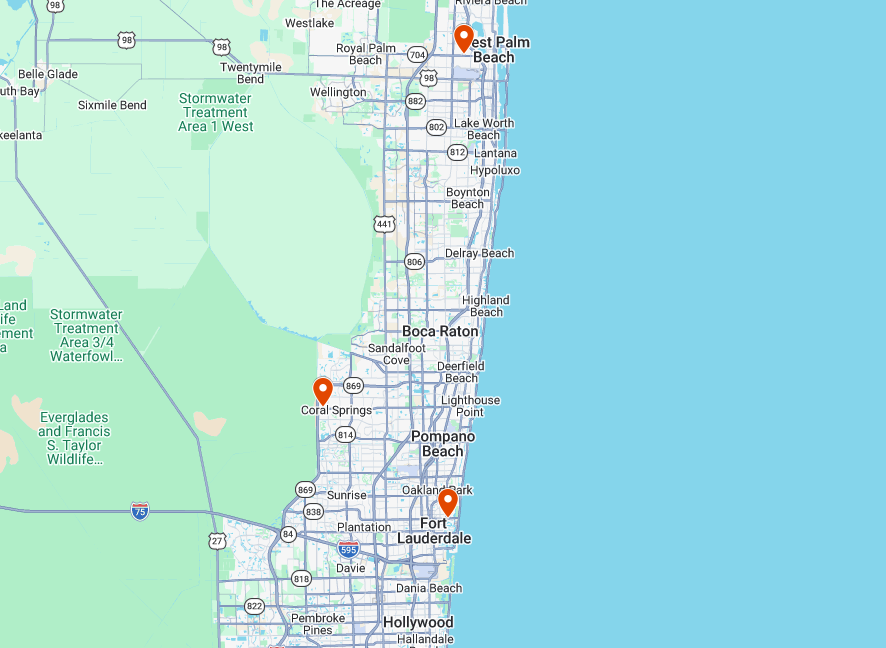
Hoffer Pest Solutions has serviced South Florida coastal properties for more than fifty years, including the high-rise corridor from Bal Harbour down through Miami Beach and north through Sunny Isles Beach. Call 954-945-8035 or request a free inspection. A technician is usually out the same day, with a written walk-through of the findings — common areas, mechanical rooms, the unit itself — before anything is signed.
Why Bal Harbour Homeowners Choose Hoffer
The call into Hoffer from a Bal Harbour address is almost never the same call twice. One day it’s a unit-owner at Harbour House who found termite frass on a windowsill the housekeeper noticed on a Tuesday. The next day it’s a property manager at one of the Collins Avenue towers asking for a coordinated treatment across three floors after a Pharaoh ant trail surfaced in a shared trash room. The day after that it’s a board member at a smaller older complex asking what no-tent options actually look like when fumigating a 28-story tower is not on the table. What every one of those calls needs on the other end is a team that has done this specific kind of work — high-rise, oceanfront, multi-owner — on this stretch of the barrier island for decades.
The technicians dispatched into Bal Harbour come out of the same Fort Lauderdale office that covers Sunny Isles Beach, Miami Beach, North Miami Beach, and Aventura — the same team, the same routing, the same standards on every visit whether the work is in a single unit or across an entire tower.
A few things that come standard
- 50+ years of pest control in Palm Beach, Broward, and Miami-Dade counties.
- ACE-credentialed leadership — Associate Certified Entomologist on staff and reviewing the work.
- Same-day service available when you call early enough in the day; we’ll always tell you straight whether we can fit you in today or first thing tomorrow.
- Free inspection before you commit to anything — including a real walk of the slab line, soffits, screens, and perimeter, not a five-minute drive-by.
- Satisfaction guarantee between visits. If something comes back, so do we.
- 4,000+ five-star reviews across South Florida.
- Family- and pet-safe treatments — targeted to entry points and pressure zones, applied with the kids, the grandkids, and the dogs in mind.
Termite Control in Bal Harbour
Termite work in Bal Harbour reads differently than termite work almost anywhere else Hoffer services, because the housing stock is almost entirely reinforced concrete and steel-frame high-rises. There is very little structural wood for a colony to consume. What there is — and what gets the calls — is the wood that lives in the roof systems of the mid-century towers (Harbour House, Balmoral, and the older 1960s and 1970s buildings with barrel-tile roofs over wood underlayment, fascia, and soffit returns), the wood in window frames and door bucks on older units, and the high-end interior wood: paneling, custom cabinetry, ceiling trim, and the decorative hardwood finishes that show up in ultra-luxury renovations at the St. Regis, Oceana, and One Bal Harbour.
Cryptotermes brevis — West Indian drywood termite — is the primary drywood pressure on this stretch of Miami-Dade coastline. Alates swarm late April into July and find their way into roof systems through ventilation gaps, into upper-floor units through window frame joints, and into renovation projects through new interior millwork that wasn’t pre-treated. The subterranean side is real too. Bal Harbour sits on a barrier island with heavy landscape irrigation, slab-edge construction along the ground-floor parcels, and oceanfront moisture year-round — conditions that support Reticulitermes flavipes (Eastern subterranean), Coptotermes formosanus (Formosan), and Coptotermes gestroi (Asian subterranean, established in Miami-Dade since the 1990s and continuing to spread). Subterranean activity in this village shows up at the parking-garage levels, in ground-floor commercial spaces along the Collins Avenue corridor, and in landscaped pool decks and lobby plantings.
Tent fumigation of a 26-story oceanfront tower is, in practical terms, off the table. The honest treatment story in Bal Harbour is built around alternatives: no-tent protocols for contained drywood activity in a single unit or a localized fascia run, spot treatments for isolated galleries, and individual-unit fumigation protocols where the activity is confined to one residence. For the rare situation where a low-rise building or a structure on a Bal Harbour Shops parcel makes whole-structure fumigation feasible, that remains an available option as well. Subterranean termites get treated with liquid termiticide applied at the slab edge and around foundation penetrations, with in-ground bait stations placed along ground-floor landscape lines as the long-term monitoring layer. Read more about our termite control services.
Mosquito Control in Bal Harbour
Mosquito pressure in Bal Harbour is coastal pressure, and it has two faces. The first is the salt-marsh side: tidal flats around Baker’s Haulover Inlet at the north end of the village and the Indian Creek waterway on the west side breed Aedes taeniorhynchus (the black salt-marsh mosquito), which can fly miles inland from the breeding site and which is unbothered by the floor a balcony happens to be on. The second is the no-see-um story, which Bal Harbour residents notice more than the mosquito story most evenings.
No-see-ums — biting midges in the Culicoides genus — emerge at dusk from the marsh edges and the seawall flats, drift up on the onshore breeze, and find balconies and pool decks across the Collins Avenue towers. They get through standard window screens because they’re small enough to pass through the mesh, which is what makes outdoor-living complaints from the upper floors of Oceana, the St. Regis, and Harbour House look exactly like the complaints from the ground-floor pool decks at the Balmoral and the Bal Harbour Tower. June through October is the peak window — heat plus humidity plus afternoon rain — but the coastal background pressure runs year-round.
A program built for this village treats the building perimeter and the landscape plantings where adult mosquitoes shelter through the day, runs barrier treatments on the balcony-adjacent vegetation where Hoffer has access through the property manager, and coordinates with the building schedule so common areas are treated outside peak resident hours. Hoffer’s mosquito control program handles both the salt-marsh adult side and the barrier side that makes balconies and pool decks usable at dusk.
Ant Control in Bal Harbour
The ant species that drive most Bal Harbour calls are not the ones a single-family homeowner inland would name first. Pharaoh ants (Monomorium pharaonis) are the dominant indoor pressure in this village’s high-rise inventory — tiny yellow-to-light-brown workers that spread floor to floor and unit to unit through plumbing chases, electrical conduits, HVAC trunk lines, and the shared infrastructure that makes a tower a tower. A Pharaoh colony at the St. Regis or Oceana does not respect the unit boundary; it reads the building as a single connected habitat and stages satellite colonies wherever moisture and food are reliable.
Ghost ants (Tapinoma melanocephalum) are the second pressure. They show up as pale, dark-headed workers along bathroom caulk lines, around dishwasher water-supply lines, and at the kitchen sink penetration — moisture readers, just like inland — but in a high-rise they move between units through the same shared chases the Pharaohs use. Carpenter ants are less common in concrete-frame buildings but show up in older garden-style complexes (Bal Harbour Manor, Whitehall, Beach Club Apartments) where wood roof systems and trim give them somewhere structural to nest.
Pharaoh ant work is the most-common Bal Harbour ant call and the easiest one to get wrong. Spraying a visible trail in one unit splits the colony — Pharaoh colonies bud aggressively when stressed — and pushes satellite populations into adjacent units. The program runs slow-acting baits placed at active trails and shared-chase access points, coordinated across affected and adjacent units in a single treatment window, with the property manager looped in so common-area harborage gets treated alongside individual residences. Treating one unit in isolation almost never holds. Read more about our ant control services.
Rodent Control in Bal Harbour
Roof rats (Rattus rattus) drive most of the rodent calls into Bal Harbour, and they’re more present in high-rise oceanfront towers than non-residents tend to expect. They climb. Exterior walls, balcony railings, the conduit runs alongside AC line sets, the trellised landscaping at lobby entrances, and the seawall-adjacent vegetation at the pool decks are all access pathways onto a tower. Once on the building, they use the same plumbing chases and HVAC chases that ant and roach colonies use to move between floors. The mid-century buildings on the Collins Avenue corridor — Harbour House and the 1960s-1970s towers in particular — have soffit-to-fascia gaps and roof penetrations that have been re-sealed many times across the decades, and that history shows up as access points roof rats find quickly.
Inside the building, signs are the familiar ones in unfamiliar settings: scratching above a ceiling on an upper floor unit, droppings on a storage cage shelf in a residents’ storage room, gnawed insulation in a mechanical room or a shared chase. The noticeable activity tends to pick up from late October into January as overnight temperatures shift and the rats move toward consistent indoor shelter. Hoffer’s rodent control program in this village leads with exclusion — walking the roofline of the tower with the building engineer, mapping every penetration and gap, and sealing them before the trapping side of the program goes in. Exterior stations are placed at the seawall, the parking garage exit, and the landscape perimeter; interior monitoring runs through trash rooms, mechanical rooms, and shared chases. Coordinated property-management access is what makes it work.
Cockroach Control in Bal Harbour
Two roach species generate the bulk of the calls. German cockroaches (Blattella germanica) are the smaller indoor species that lives entirely inside the building — they don’t migrate in from outside the way American cockroaches do — and on Collins Avenue they cycle between units along the same shared infrastructure ants and rodents use: plumbing chases between back-to-back kitchens, the void under stacked refrigerators, the trash chute room on each residential floor, and the back-of-house pathways that connect food-service space to residential floors in mixed-use towers. A single-unit German cockroach call in a Bal Harbour high-rise is almost never a single-unit problem in real terms. The treatment plan has to read the building.
American cockroaches — palmetto bugs, Periplaneta americana — are the large outdoor species, and on a coastal village they live in the storm-drain system, the seawall harborage zones, the irrigation utility boxes along the landscape lines, and the lobby planter beds with consistent moisture. After heavy rain or a high-tide event, populations push toward the nearest dry structure, which means the ground-floor lobbies, parking garage levels, and back-of-house mechanical rooms see the most American roach pressure at the building scale.
The German cockroach program in a Collins Avenue tower treats the building, not just the kitchen. Baits and growth regulators get placed at the actual harborage points — the back of the dishwasher cabinet, the cavity behind the stacked refrigerator, the seam where the lower drawer meets the cabinet box, and the trash chute room on each floor where populations stage between unit-level infestations. A retail aerosol scatters those colonies and reseeds them in adjacent units through the same chases that carried them in. The American cockroach response is exterior-driven and runs at the building scale: perimeter treatment at the slab edge and the seawall harborage line, harborage reduction in irrigation utility boxes and lobby planter beds, and sealing work on parking garage door seals, trash room thresholds, and ground-floor entry sweeps where palmetto bugs cross into back-of-house space after a tide event. Read more about our cockroach control services.




Hoffer Pest Solutions — Serving Bal Harbour For 50+ Years
Hoffer Pest Solutions has worked the Miami-Dade coastal corridor — Bal Harbour, Sunny Isles Beach, Miami Beach, North Miami Beach, and Aventura — for more than fifty years. The programs that work in this village are not lifted out of a national high-rise playbook. They are built around what an honest inspection finds inside a concrete-and-steel oceanfront tower on Collins Avenue: which fascia run the drywood swarmers reached last spring, which shared chase the Pharaoh ants are staging through, which seawall harborage zone is sending palmetto bugs into the parking garage this rainy season. An Associate Certified Entomologist reviews every program, the inspection is a walk of the property — common areas, mechanical rooms, the unit itself — before anything is written, and the satisfaction guarantee runs between scheduled visits if something comes back.
The same Fort Lauderdale team covers Sunny Isles Beach, Miami Beach, North Miami Beach, and Aventura — the cluster of barrier-island and waterway-adjacent cities that frame Bal Harbour on every side.
Call 954-945-8035 or request a free inspection. Most Bal Harbour calls — single unit, multi-unit, or whole-building coordination — can be on the same-day schedule when they come in by mid-morning.
Contact Hoffer Pest Solutions
Hoffer Pest Solutions
1975 E Sunrise Blvd #503
Fort Lauderdale, FL 33304
954-945-8035
Frequently Asked Questions
Do luxury condos in Bal Harbour actually have termite issues?
Yes — drywood termites in particular. The concrete-and-steel construction at towers like the St. Regis, Oceana, One Bal Harbour, and Harbour House means termites are not eating structural framing, but they do find the wood that lives in roof systems, fascia, soffits, window frames, and high-end interior millwork (custom cabinetry, ceiling trim, decorative paneling). Cryptotermes brevis swarmers reach upper-floor units through roof and window-frame gaps from late April through July. Subterranean pressure shows up at parking-garage levels, ground-floor commercial spaces, and lobby plantings along the Collins Avenue corridor.
How do you treat termites in a 26-story Bal Harbour tower if tent fumigation isn't practical?
With protocols built for high-rise reality. No-tent treatments handle contained drywood activity in a single unit or a localized fascia run. Spot treatments work for isolated galleries — a frass cone at one window jamb, a single ceiling trim run. Individual-unit fumigation protocols cover situations where activity is confined to one residence and the building configuration supports them. Whole-structure fumigation remains an option for smaller low-rise buildings on Bal Harbour parcels where it’s feasible. Subterranean termites get treated with liquid termiticide at the slab edge and bait stations along ground-floor landscape lines.
Why are Pharaoh ants such a common problem in Bal Harbour high-rises?
Because Bal Harbour’s housing inventory is shared-infrastructure inventory. Pharaoh ants (Monomorium pharaonis) treat a tower as one connected habitat — they spread floor to floor and unit to unit through plumbing chases, electrical conduits, HVAC trunk lines, and trash-chute infrastructure. Treating one unit in isolation makes the problem worse, because spraying a visible trail splits the colony into satellite populations. The fix in a building like Oceana or Harbour House is coordinated baiting across affected and adjacent units in a single treatment window, with the property manager looping in common-area harborage zones.
How do I deal with no-see-ums on my oceanfront balcony in Bal Harbour?
Treat the source areas you can reach and add a barrier program. No-see-ums (Culicoides biting midges) emerge at dusk from the salt-marsh flats near Baker’s Haulover Inlet and the Indian Creek seawall edges, then drift up on the onshore breeze to balconies across the Collins Avenue towers — they’re small enough to pass through standard window screens. A program treats the building-perimeter landscape and shelter vegetation where adults rest through the day, and coordinates barrier treatments on balcony-adjacent plantings where building access allows. Peak pressure is June through October, but background pressure runs year-round.
Are Pharaoh ants in a unit at the Balmoral or Harbour House the same problem as Pharaoh ants in a single-family home?
No — the work is fundamentally different. In a single-family house, a Pharaoh ant treatment can stop at the property line. In a Bal Harbour mid-century tower like the Balmoral, Harbour House, or Bal Harbour Tower, the colony’s range is the building. The shared plumbing chases between back-to-back kitchens, the electrical conduit runs, and the trash room infrastructure on each residential floor are all part of the foraging territory. The program has to read the building as a unit, which is why property-manager and HOA-board coordination is part of every Pharaoh ant job in this village.
What's the difference between salt-marsh mosquitoes and the freshwater mosquitoes I had at my last inland house?
Range and habitat. Aedes taeniorhynchus, the black salt-marsh mosquito breeding in the tidal flats around Baker’s Haulover Inlet and the Indian Creek margins, can travel miles from the breeding site — meaning a unit on the 22nd floor of a Collins Avenue tower is not too far up for them. Freshwater mosquitoes from an inland retention pond rarely move that far. Bal Harbour gets both, plus the no-see-um pressure from the same coastal flats, and the program adjusts breeding-source treatment and adult-resting-area barriers to match the species mix.
How does Hoffer treat pests in a Bal Harbour condo without disrupting the residents?
By building the treatment around the building’s schedule, not the technician’s. For a single-unit job, work is scheduled at the resident’s convenience and uses interior product placement focused on structural voids — behind cabinetry, into the slab edge, inside the toe-kick — rather than open-surface application. For coordinated multi-unit jobs at towers like Oceana, the St. Regis, or One Bal Harbour, the property manager schedules access across affected units in a defined window, common-area work runs outside peak resident hours, and written findings come back to both the resident and the building management.
What pest pressures do oceanfront properties in Bal Harbour see that inland Miami-Dade properties don't?
Five that show up consistently. No-see-ums drifting in off Baker’s Haulover Inlet and the Atlantic. Salt-marsh mosquitoes with the range to reach high-floor balconies. American cockroaches from seawall and storm-drain harborage pushing toward ground-floor lobbies after rain or tide events. Roof rats using exterior walls, AC conduits, and seawall vegetation to climb onto towers. And drywood termites with concentrated pressure on the wood in roof systems, fascia, and decorative interior millwork because that’s where the building’s wood actually lives.
Are Hoffer's treatments safe to use in a Bal Harbour residence with children and pets?
Yes. Product selection and placement are built around the way a Bal Harbour residence is actually lived in. Pharaoh and ghost ant baits go inside the shared-chase access points and behind appliances at the colony’s actual staging zones — never on open countertops or floor surfaces a child or pet crosses through their day. Termite spot work targets a specific gallery in fascia, trim, or window frame and stays contained to that work area. Mosquito and no-see-um barrier treatments on balconies and pool deck plantings are timed in coordination with the building so the common areas are usable on residents’ normal schedule. The framework is straightforward: treat where the pest stages, not where the family lives.
Is Hoffer Pest Solutions the right company for pest control in Bal Harbour?
Bal Harbour carries a property mix few South Florida pest companies see on a regular route — ultra-luxury post-2000 towers (St. Regis, Oceana, One Bal Harbour), mid-century high-rises with mature roof systems (Harbour House, the Balmoral, Bal Harbour Tower), the small low-rise garden-style complexes that have stood here since the late 1940s, and the commercial pressure that surrounds Bal Harbour Shops. The right answer is a team that has serviced all of those property types on this barrier island for decades, knows how to coordinate a multi-unit treatment with a property manager or HOA board without disrupting residents, and runs every program past an Associate Certified Entomologist before it goes to the field. Hoffer does all three. Same-day dispatch handles the morning call that needs an afternoon answer; the satisfaction guarantee handles the rest.