The Palmetto Bug and the German Roach Are Two Different Problems
Same Word, Different Pest, Different Plan
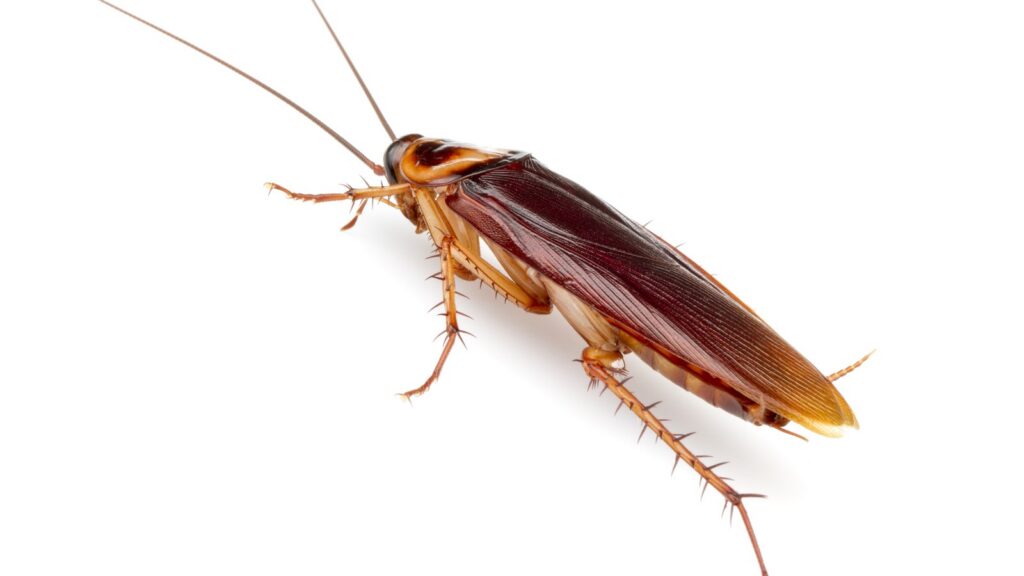
When a Boca homeowner says “I have a roach problem,” they could mean one of two completely different situations, and the answer changes which way the work goes. The first is the palmetto bug — the large reddish-brown American cockroach that wanders out of mulch beds and storm drains after a rain and ends up on a kitchen floor or in a master bathtub. Australian and smokybrown cockroaches travel the same circuit, and the smokybrown often comes down out of the attic through a soffit gap. These are outdoor insects walking in through gaps under doors and at roof-line penetrations. They are alarming when you see one, but they almost never establish a breeding population indoors. The second situation is the German cockroach — a half-inch light-brown insect with two dark stripes down the back of its head — and it is a different pest entirely. German roaches live and breed exclusively indoors, reproduce faster than any other cockroach in Florida, and once they’re in a kitchen or a condo wall void they don’t leave on their own.
Boca’s geography produces both. The mature oak and ficus canopy through Old Floresta and Spanish River Land, the deep mulch beds along country-club fairways at Boca West and Mizner Country Club, the seawall plantings along the Intracoastal — all of those drive outdoor palmetto pressure. Year-round warm-and-wet conditions mean American, Australian, and smokybrown roaches are part of the outdoor ecosystem on every property. The German side runs on different geography: older Mizner-era plumbing in east-of-Federal homes, shared chases between condo units in oceanfront mid-rises and inland garden-style buildings, and the dense restaurant footprint along Mizner Park, Federal Highway, Glades Road, and Yamato Road. A German infestation in a downtown condo doesn’t come from the canal bank — it comes from a neighboring unit’s wall void or secondhand kitchen equipment carried into the building.
Hoffer Pest Solutions has worked Boca cockroach calls for more than 50 years, and the work runs on two tracks because the pest does. For palmetto pressure, the answer is an exterior perimeter and a tight envelope at the doors, vents, and utility penetrations. For German roaches, the answer is interior gel baiting, insect growth regulators that break the reproductive cycle, void treatment in the cracks where they hide, and a sanitation conversation the homeowner has to be part of. The inspection always comes first — spraying a German roach with the wrong product makes the problem worse. Call 954-892-5742 to schedule a free Boca Raton cockroach inspection; same-day appointments are available in most cases.
Our Boca Raton Cockroach Control Approach
Inspection: Identifying the Species Before Anything Else
The first job is identifying which roach is on the property, because the treatment for one is the wrong treatment for the other. The technician asks where the sightings are happening — outside on the patio at night versus inside a kitchen cabinet during the day — and what the roach looked like. From there the inspection moves into the habitat. For palmetto-side work, the technician walks the exterior: mulch depth against the foundation, weep holes, the gap under the garage door, soffit vents, plumbing penetrations, AC line set entry, and roof flashings on older barrel-tile homes where smokybrowns get into attic voids. For German-side work, the inspection moves indoors: under the kitchen sink, behind and underneath the refrigerator, the dishwasher motor compartment, the gap behind the stove, the hinges and door tracks of every kitchen cabinet, and any cardboard or paper-bag harborage the homeowner is storing. Daytime sightings of a German roach mean the population has grown past available harborage — that changes the urgency of the plan.
Palmetto, Australian & Smokybrown Roaches: Keeping Them Outside
Outdoor roaches enter through small gaps and stay near the entry point until they find water or food. The treatment is built to stop them at the envelope. A residual exterior barrier goes around the foundation perimeter, door and window frames, the garage door’s bottom seal and side jambs, the soffit line under the eaves, the AC line set, every plumbing stack and dryer vent, and the roof-soffit junction on older barrel-tile homes where smokybrowns drop down from the attic. On country-club lots through Boca West, Boca Pointe, Broken Sound, and Mizner Country Club, the treatment runs along the back-of-lot landscape edge where palmettos move out of mulch toward the back patio at night. We pair the chemistry with exclusion guidance — door sweeps, screening on weep holes and soffit vents, sealing around utility penetrations — and with landscape-side specifics: mulch pulled back from the stucco line, palm-frond cleanup off the roof, and outdoor-storage placement away from the foundation. The chemistry kills the roach that crosses the line; exclusion and landscape work keep the population off the line in the first place.
German Cockroaches: Eliminating an Indoor Infestation
German cockroach work is precision work, and the order matters. The first piece is gel baiting — pea-sized placements set into the cracks where German roaches live: under the kitchen sink, inside cabinet hinges, the refrigerator motor compartment, the gap between dishwasher and cabinet box, and wall voids accessed through utility penetrations. The bait is carried back to harborage and shared through the colony; secondary kill from cannibalism and contact with bait-fed bodies is a significant part of why baiting works. The second piece is an insect growth regulator (IGR), which sterilizes adults and prevents nymphs from molting into reproductive adults, so the population can’t rebuild from surviving eggs. The third piece is direct treatment of wall voids and crack-and-crevice harborage with a non-repellent product or desiccant dust — applied so it doesn’t push surviving roaches deeper into the structure. Throwing a can of grocery-store roach spray at a German infestation almost always makes the problem worse: the repellent chemistry scatters the population through wall voids and into adjacent units, and what looked like a kitchen problem becomes a whole-unit problem.
Sanitation: The Homeowner's Half of the Work
For palmettos, sanitation is a supporting role. For German roaches it’s load-bearing — without it, no treatment program will hold, and that’s a truth we’d rather state at the inspection than after a third return visit. German roaches survive on food residues a homeowner doesn’t think of as “food”: grease film on top of the refrigerator, crumbs in the dishwasher door seal, pet kibble spilled behind the bowl, cardboard stored under the sink, dish sponges left wet overnight. We walk the kitchen with the homeowner and translate that into specifics — wipe routine, sealed food storage, trash routine, pet-bowl placement, decluttering. A homeowner who runs the sanitation side gets a cleared kitchen on the standard schedule; one who doesn’t can run the same chemical program three times and never get clear.
Follow-Up: Why German Roaches Take More Than One Visit
A palmetto-driven exterior program is largely episodic — quarterly service refreshes the barrier and indoor sightings drop sharply. German roach elimination runs differently. The female carries her egg case (ootheca) until one to two days before hatch, and each ootheca releases thirty to forty nymphs; the eggs are physically shielded from many of the products that kill adults and nymphs. So the schedule is: initial treatment with gel bait, IGR, and void work; a follow-up at two weeks to catch new nymphs hatched from oothecae that survived the first round; and a second follow-up at four to six weeks to verify clearance. Heavier infestations and condo units with neighboring activity may need a third visit. A job is closed only after two back-to-back visits come up empty — no live roaches, no fresh droppings.
German Cockroaches & Asthma: Why Boca Families Need to Take This Seriously
The reason German cockroach control isn’t just a “yuck” issue is medical, and it’s specific to kids. Cockroach allergens — proteins in roach saliva, droppings, shed skins, and dead bodies — are one of the most documented indoor asthma triggers in U.S. homes. A 1997 New England Journal of Medicine study (Rosenstreich et al.) tied cockroach allergen exposure to higher rates of asthma severity, more emergency room visits, and more days of missed school for children, and the finding has been reproduced since. For Boca families the implications are practical. A child with asthma in a home with active German roach pressure is likely getting worse symptom control than medication alone explains. Multi-family condo residents in older buildings can be exposed through HVAC distribution and shared wall voids even when the household has never seen a roach — the proteins move through dust and air. None of this is a reason to panic. It’s a reason to take an indoor German roach sighting seriously and treat it thoroughly.
Signs You Have Cockroaches in Your Boca Raton Home
The signs of palmetto activity and German activity are different. Here’s what Boca homeowners actually see:
- A live roach in the bathtub, on the kitchen floor, or in the garage at night. A reddish-brown adult one-and-a-half inches long with a pale figure-eight on its head is a palmetto bug (American cockroach). A near-black adult slightly smaller is a smokybrown, often dropping from an attic gap. Australian roaches look similar to the American but smaller, with yellow streaks on the leading edge of the wings.
- A live roach in daylight on a kitchen counter or inside a cabinet. A half-inch light-brown insect with two dark parallel stripes on the back of its head is a German cockroach, and daytime sightings indicate the population has grown past available harborage. Treat this one with more urgency than the palmetto.
- Droppings. German droppings look like ground black pepper — clustered along cabinet seams, in hinge gaps, on the shelf above the refrigerator, behind a cardboard liner under the sink. Palmetto droppings are larger and more cylindrical, typically in attic insulation, garage corners, or behind exterior storage.
- Egg cases (oothecae). German oothecae are tan, ridged, and about a third of an inch long — glued into cabinet corners, behind the dishwasher, inside refrigerator motor compartments. Palmetto oothecae are dark brown and slightly larger, in attics, crawl spaces, or outdoor harborage.
- A sweet, musty, slightly oily smell. Heavier German infestations release aggregation pheromones that produce an unmistakable odor most people describe as “sickly sweet” — if you’ve started noticing it under the sink or in the pantry without a source, that’s the bug.
- Shed skins. Cockroaches molt five to seven times before adulthood, leaving translucent hollow casings near harborage — cabinet corners, behind appliances, along baseboards.
- Asthma symptoms in a child that worsen at home and improve when away. Not a guarantee of cockroach allergen exposure — but worth raising with the pediatrician, and worth getting the house inspected.
Cockroach Pressure Across Boca Raton
East-of-Federal historic Boca — Old Floresta, Spanish River Land, the older streets through Royal Palm Yacht & Country Club — carries a mixed profile. Mature oak canopy and decades-old mulch beds drive heavy outdoor palmetto pressure, and Mizner-era plumbing in some original kitchens creates moisture German roaches need indoors. Smokybrowns drop down from barrel-tile attic voids through soffit gaps.
Waterfront and Intracoastal-adjacent streets — The Sanctuary, the inner streets of RPYCC, Por La Mar, Boca Harbour — get a steady drift of palmettos out of seawall vegetation, dock storage, and the planted edge against the bulkhead. American and Australian roaches travel the seawall and enter through pool-cage doors left ajar. German pressure on this side is usually low unless an older kitchen has hidden moisture.
Downtown Boca and the Mizner Park corridor are German cockroach country, and the dynamics are commercial-driven. The dense restaurant footprint along Mizner Park, Federal Highway, and Glades Road creates a constant background of German pressure that bleeds into adjacent retail, office, and residential through shared walls, plumbing chases, dumpster zones, and the secondhand-equipment market. Treatment here is rarely about one unit in isolation — it’s about the building and the block.
West-of-Turnpike country-club communities — Boca West, Boca Pointe, Boca Falls, Mizner Country Club, Stonebridge, Broken Sound — are palmetto-dominated. Deep mulch beds, daily HOA irrigation, mature canopy, and golf-course buffer plantings give American and Australian roaches the outdoor habitat they thrive in. Smokybrowns find their way into attics on tile-roof homes and drop down at night. German pressure is uncommon unless an older villa has unaddressed plumbing issues.
Older condo stock along the south-Federal and Camino Real corridor, plus the inland garden-style buildings around Boca Pointe and along Glades Road, carries the city’s heaviest unit-to-unit German roach migration risk. Shared plumbing chases, continuous wall assemblies, and shared HVAC trunks let a population in one unit seed the units above, below, and beside it over a few months. When we treat a condo here, we ask about activity in adjoining units and recommend coordinated treatment when the evidence calls for it.
Hoffer Pest Solutions: Boca Raton Cockroach Specialists
We’re a family-owned, second-generation South Florida pest company well past the fifty-year mark. The technician who shows up at your door has worked German infestations in oceanfront condos, palmetto pressure on Old Floresta porches, smokybrown drop-ins on barrel-tile homes through RPYCC, and back-of-house programs in Mizner Park and Federal Highway buildings — and can tell you in the first ten minutes which problem you actually have. Every job is backed by our satisfaction guarantee, and every visit is written up so you know what was treated, where, and what to watch for. For families with kids and asthma in the picture, we treat the work as the health intervention it is. Call 954-892-5742 — same-day inspections are available in most cases.
Cockroach control is one piece of a broader Boca Raton pest control plan; for ants, rodents, termites, mosquitoes, bed bugs, and ongoing residential protection, start at the Boca Raton pest control hub or call the number above. For Hoffer’s full cockroach control coverage across South Florida, see our general cockroach control page.
Frequently Asked Questions: Cockroach Control in Boca Raton
What's the difference between a palmetto bug and a cockroach in Boca Raton?
A palmetto bug is a cockroach — specifically the American cockroach, a one-and-a-half-inch reddish-brown outdoor species that lives in mulch beds and storm drains and occasionally walks in through a gap under a door. “Palmetto bug” is just the polite South Florida name for it. The cockroach you really don’t want is the German cockroach — a half-inch indoor-only species with two dark stripes on its head that reproduces fast, hides in kitchen cabinets and appliance motors, and is the source of the cockroach-allergen asthma trigger. Two different bugs, two different treatment plans.
Why do I see cockroaches after it rains in Boca?
Heavy rain floods the mulch beds, storm drains, and ground-level harborage where outdoor palmettos live, and the roaches move to higher and drier ground. Sometimes that means a slab edge, sometimes a garage, sometimes a tub drain on the same storm system. Seeing one or two palmettos indoors after a Florida downpour isn’t an infestation — it’s weather. The fix is exterior: tighter perimeter chemistry, sealed thresholds and weep holes, mulch pulled back from the foundation, and exclusion at the AC line set and plumbing penetrations.
Can cockroaches spread between condo units in Boca Raton?
Yes, and this is specific to German cockroaches. Older Boca condo buildings — oceanfront mid-rises along A1A, inland garden-style buildings around Boca Pointe and Glades Road, the south-Federal and Camino Real corridor — share plumbing chases, wall assemblies, and HVAC trunks between units. A German population in one unit can seed the unit next door, above, and below over a few months. When we treat a Boca condo for German roaches, we ask about adjoining units and recommend coordinated treatment when the evidence calls for it. Skipping that step is usually how a treated unit gets re-infested from the neighbor’s wall void.
Are cockroach treatments safe for kids with asthma?
Yes — and for a household with an asthmatic child, treating active German roach pressure is itself an asthma-management step. Cockroach allergens are one of the most documented indoor asthma triggers in U.S. homes, established in the 1997 Rosenstreich NEJM study and reproduced since. The products we use indoors for German roach work are targeted placements — gel bait in cabinet cracks, IGR in voids, desiccant dust in wall penetrations — not broadcast sprays across living surfaces a child contacts. We document every product applied on the service ticket and walk the parent through what was placed where, so the pediatrician or allergist has the information if it comes up.
Does Hoffer treat restaurants and commercial properties for cockroaches in Boca Raton?
Yes — our commercial cockroach work covers offices, retail, hospitality, condo associations, HOA-managed buildings, and multi-tenant properties along the Boca corridors (Mizner Park, Glades Road, Yamato Road, Federal Highway, Town Center, Military Trail). German pressure in commercial buildings rarely respects suite boundaries — a single back-of-house source can seed adjacent spaces through shared walls and dumpster zones — so commercial programs typically include scheduled inspections, baiting cycles, written documentation for the property file, and coordination with property management. Call the number above and we’ll set up a site walk.