Why Boca Has a Year-Round Mosquito Problem
Intracoastal, Canals, Golf-Course Lakes, Irrigation: A Property Is Never Far From Water
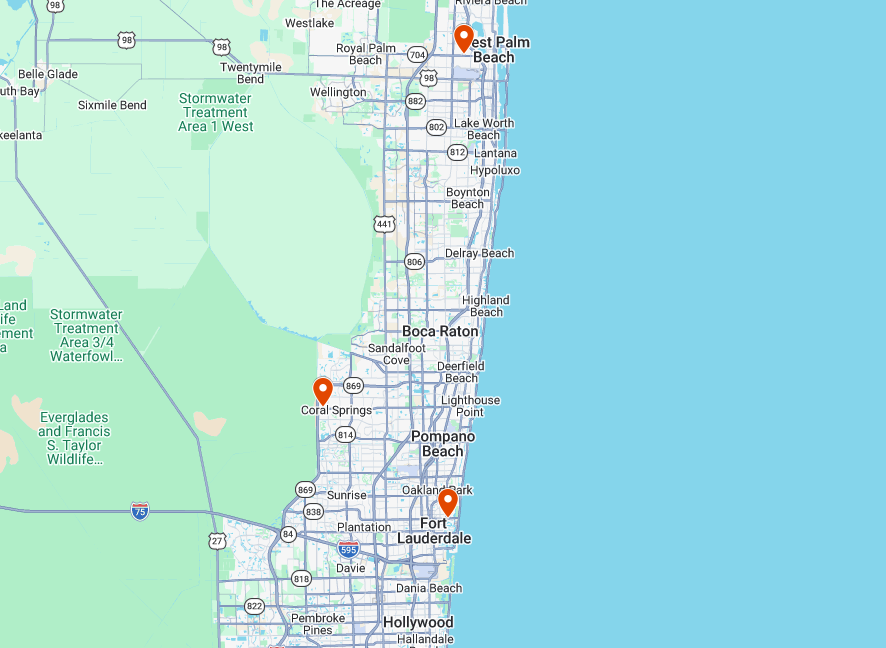
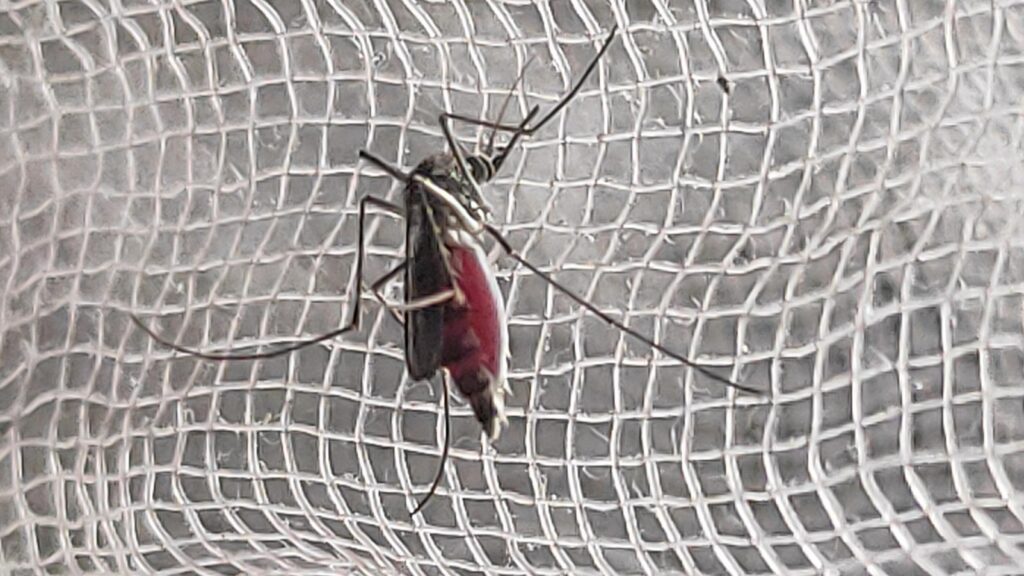
Mosquito pressure in Boca Raton doesn’t come from one source. It comes from five, stacked on top of each other. The Intracoastal mangrove fringe runs the full eastern length of the city and pushes salt-marsh mosquitoes (Aedes taeniorhynchus) — vicious day-and-night biters that can fly miles inland after a king tide or heavy rain. The finger-canal grid through Boca Harbour, Golden Harbour, Lake Rogers Isles, and Royal Palm Yacht & Country Club, plus El Rio Canal and the Boca Raton Canal, mixes brackish and freshwater pockets where Aedes aegypti (yellow fever mosquito, daytime container-breeder, dengue and Zika vector), Aedes albopictus (Asian tiger mosquito), and Culex species (nighttime biter behind West Nile virus in Florida) all find habitat. West of the Turnpike, every country-club community — Boca West, Boca Pointe, Boca Grove, Broken Sound, Mizner Country Club, Stonebridge, Woodfield — backs onto golf-course lakes and retention ponds with daily HOA irrigation keeping mulch beds and low-lying turf wet. After a summer thunderstorm, the gallinipper (Psorophora ciliata, five to ten times the size of a normal mosquito, painfully aggressive) emerges in floodwater pools across those same low spots. Five species, five breeding stories, one property to protect.
And then there are the no-see-ums. Technically biting midges (Culicoides), not mosquitoes — but the complaint is the same: tiny welts that itch for days, a porch nobody can sit on at dusk. They breed in mangrove mud and salt-marsh edges, and on Intracoastal-adjacent streets they make a property unusable in the worst weeks. The Sanctuary, a ninety-two-home waterfront community north of Spanish River Boulevard, made the Sun-Sentinel in 1996 over exactly this: biting pressure off the adjacent mangrove islands was severe enough to slow home sales until the community committed to aggressive permethrin treatment of the surrounding vegetation. Three decades on, the mangroves are still there, and so are the midges.
Palm Beach County Mosquito Control runs aerial and ground programs across the county, but their work covers public rights-of-way, parks, preserves, and roadways — not private property. The mosquito or midge breeding in a homeowner’s mulch bed, bromeliad cup, seawall vegetation, or pool-cage gutter is theirs to handle, and a single fogging treatment won’t hold it. Hoffer Pest Solutions has worked Boca yards for more than 50 years — Old Floresta porches, Sanctuary-side waterfront, west-of-441 country clubs — and our crews build the program around where the mosquitoes are actually coming from on each property. Call 954-892-5742; same-day service is available in most cases.
Request Free Quote
Our Boca Raton Mosquito Control Approach
A real mosquito program in Boca has four moving parts. Spraying without the other three is why most homeowners feel like the bugs come right back.
Inspection: Finding Every Source Of Standing Water On The Property
The first visit is a walk of the property with one job: find every place water collects and sits for more than a few days. Bromeliads (every Boca landscape has them) hold water in the leaf axils and are prime Aedes container habitat. Saucers under potted plants, clogged roof gutters, tarps, boat covers with rain in the folds, pool-cage gutters, irrigation low spots in the turf, dock storage boxes — all get checked. On waterfront properties, we walk the seawall and dock line; boat lift covers and the gap behind dock storage routinely hold water nobody thinks about. On west-Boca country-club lots, we read the irrigation pattern and the mulch-bed grade against the foundation — daily watering in a low spot creates a permanent breeding site the homeowner has never registered as one. The inspection also identifies daytime resting habitat (undersides of leaves, dense shrub interiors, eaves), because that’s the surface treated next.
Barrier Treatment: Reducing The Adult Mosquito Population On The Property
Adult mosquitoes don’t fly all day; they rest. Undersides of leaves, inside shrub clusters, under eaves and patio covers, the lower few feet of dense plantings, shaded fence lines. We apply a residual product to that resting habitat — perimeter foliage, the lower canopy of mulch-bed plantings, the shaded side of the house. It knocks down adults on contact and keeps working roughly three to four weeks in the rainy stretch, longer in dry months. We’re not broadcasting a fog over the lawn; we’re treating the surfaces mosquitoes actually land on. That matters for pollinators (we treat when bees aren’t foraging and avoid blooms), for pets (proper dry times before the family is back on the patio), and for the result — a fog dissipates in twenty minutes; a residual works for weeks.
Larvicide & Source Reduction: Killing Mosquitoes Before They Fly
Some standing water can be eliminated — empty the saucer, flush the gutter, flip the bucket, drain the boat cover, swap out the bromeliad water. We tell the homeowner exactly which sources to fix. Some can’t be eliminated: an ornamental pond, a fountain basin, a city or HOA storm-drain, a back-property low spot that holds water for days, the pond edge of a golf-course lake against the property line. For those we use a granular larvicide (Bti — a naturally occurring bacterium specific to mosquito and midge larvae, safe for fish, frogs, dogs, and birds) applied directly into the water. Larvae die before reaching the biting adult stage. On waterfront properties, larvicide at the seawall edge and dockside collection points takes serious weight off the overall pressure.
Targeted Stations For Container-Breeding Aedes
For properties with persistent daytime-biter pressure — Aedes aegypti and Aedes albopictus from small containers nobody can fully eliminate — auto-dissemination stations can play a role. A mosquito enters the station, picks up larvicide, and carries it to every breeding site she lays eggs in afterward, including ones we can’t reach. Where this fits the property, we’ll discuss it during the inspection.
Ongoing Service: Heavier In The Rainy Season, Lighter In The Dry Months
South Florida mosquito pressure isn’t flat. From the start of the rainy season through the fall, breeding habitat refreshes every time a thunderstorm rolls through, and a property needs a fresh barrier every three to four weeks to stay ahead of it. Through the cooler, drier stretch, pressure drops, and the schedule can stretch to every five to six weeks with the same outcome. We don’t sell a fixed twelve-month plan and call it a day; the schedule adjusts to the conditions. Every visit re-inspects the property for new water sources (a hurricane brings new debris, a re-landscaped flower bed creates a new low spot, a new irrigation zone changes everything), refreshes the barrier on resting surfaces, and re-doses any larvicide that’s been washed out.
Signs You Need Professional Mosquito Control in Boca Raton
Most Boca homeowners don’t call until the yard has become unusable. Here’s what that usually looks like by the time the phone rings:
• Outdoor space gets surrendered at dusk. Lanai, pool deck, back patio go unusable between roughly an hour before sundown and full dark — Culex peak.
• Kids and dogs come in with bites on ankles and lower legs. Often Aedes pressure from a container source within a hundred yards.
• Daytime biting. That’s Aedes aegypti or Aedes albopictus, both daytime container breeders — meaning water on the property they’re hatching out of.
• Clusters of tiny welts that itch for days. No-see-ums, a coastal-Boca signature. Properties east of US-1 or near the Intracoastal or Hillsboro Canal mangrove fringe deal with midges as part of the picture.
• Visible “clouds” coming off the back of the property after rain. Almost always a localized breeding site nobody’s found — a turf low spot, a clogged gutter, a bromeliad cluster, a dock locker.
• Guests get bitten harder than the people who live there. Regulars have dampened histamine response; the breeding is still happening.
Mosquito Pressure Across Boca Raton
Intracoastal and waterfront Boca — RPYCC, The Sanctuary, Por La Mar, Boca Harbour, Golden Harbour, Spanish River Land — carries a profile no other part of the city has. Salt-marsh mosquitoes (Aedes taeniorhynchus) emerge from the mangrove fringe after every high water event and bite day and night. No-see-ums from the same mud slip through standard window mesh. Work here weights toward seawall vegetation, the dock and boat-lift area, and standing water around dock structures.
Lake Boca Raton and the downtown coastal strip — streets around the inlet, older single-family stock east of Federal, high-rise condos along A1A — carries the heaviest Aedes aegypti pressure in the city. Boat lift covers, dock storage boxes, drained-down pool covers on second homes, planter saucers on balconies, residential bromeliads — all container habitat for the daytime biter behind dengue and Zika risk. Inspection here is about finding small water holders, not treating a wide perimeter.
The El Rio Canal corridor and the central finger-canal grid — Boca Bath & Tennis, the older streets around RPYCC, the Mizner-era blocks — sees a mixed-species profile. Culex pressure off slower-moving canal pockets handles the dusk-and-after biting; the same yards’ container habitat keeps Aedes aegypti and albopictus active during the day. Treatment runs broader here: perimeter foliage, canal-bank vegetation, and an honest source-reduction conversation with the homeowner.
West-of-Turnpike country-club communities — Boca West, Boca Pointe, Boca Falls, Mizner Country Club, Stonebridge, Broken Sound, Boca Grove, Woodfield — are a different problem entirely. Golf-course lakes and stormwater retention ponds within yards of the back patio, daily HOA irrigation keeping turf and mulch wet year-round, mature oak and ficus canopy holding shaded resting habitat, bromeliads throughout the landscape design — the property has a permanent breeding subsidy from the surrounding community. The program compensates with barrier treatment on back-of-lot foliage and the canopy edge, larvicide at lake edges where access permits, and tighter cadence through the rainy season.
Newer west Boca, west of 441 — Boca Bridges and the country-club communities along the Loxahatchee preserve buffer — adds preserve-edge habitat on top of the country-club profile. After a tropical storm or unusually heavy summer rain, the gallinipper (Psorophora ciliata) is a real presence. Service here watches the storm-drain catch basins along the streets, the back-lot drainage toward the preserve, and any low-lying turf that holds water more than a day after a soak.
Hoffer Pest Solutions: Boca Raton Mosquito Specialists
Mosquitoes aren’t a once-a-month spray problem in Boca Raton. They’re a habitat problem that has to be read property by property — which species is biting, when, where they’re breeding, what’s keeping them around. Our crews have spent careers reading those details on Boca yards: salt-marsh mosquitoes off The Sanctuary mangroves, Aedes pressure in the bromeliad-heavy landscaping of an Old Floresta cottage, the Culex haze off a Boca West lake edge at dusk, the floodwater gallinippers that show up west of 441 the day after a storm. Hoffer is family-owned, in our second half-century of work across South Florida. The job is backed by our satisfaction guarantee, every visit is written up, and the schedule adjusts to what’s actually happening on the property — heavier through the rainy stretch, lighter through the dry months. Call 954-892-5742 to get the inspection on the calendar; same-day service is available in most cases.
Mosquito control is one piece of a broader Boca Raton pest control plan; for ants, rodents, termites, cockroaches, bed bugs, and ongoing residential protection, start at the Boca Raton pest control hub or call the number above. For Hoffer’s full mosquito control coverage across South Florida, see our general mosquito control page.
Frequently Asked Questions: Mosquito Control in Boca Raton
Why are mosquitoes worse near the Intracoastal in Boca Raton?
The Intracoastal mangrove fringe breeds two species an inland property doesn’t deal with. Salt-marsh mosquitoes (Aedes taeniorhynchus) lay eggs in mud above the high-tide line; when a king tide or storm floods that mud, eggs hatch in coordinated emergences. The adults are strong fliers and bite day and night. The same mud breeds no-see-ums (biting midges), which pass through standard window screens. Waterfront streets through The Sanctuary, Por La Mar, RPYCC, Boca Harbour, and Golden Harbour sit inside that zone, and service weights toward seawall foliage, the dock and boat-lift area, and larvicide where pooled water is reachable.
What time of year are mosquitoes worst in Boca Raton?
The rainy season — roughly May through October — is when pressure peaks. Three to five days after a soaking summer thunderstorm, the next generation is biting. Aedes aegypti and albopictus run heaviest in the wet season but never fully disappear. Culex (West Nile vector) peaks late summer into early fall. Salt-marsh emergence is tied to high water events rather than the calendar — a storm surge or king tide in any month produces a wave of biting. The dry stretch from December through March eases pressure but doesn’t end it, so our schedule runs tighter through the rainy stretch and lighter through the cooler season.
Are no-see-ums the same as mosquitoes in Boca?
No — they’re biting midges (Culicoides), a different family — but the homeowner experience overlaps and the service question is usually the same. They breed in mangrove mud along the Intracoastal and the Hillsboro Canal corridor, pass through standard window screens, and leave welts that itch for days. The Sanctuary’s no-see-um problem made the Sun-Sentinel in 1996. Our barrier treatment reduces midge populations as a secondary effect, though properties right on the mangrove fringe sometimes need an enhanced approach.
Does Hoffer's mosquito control work on daytime biters too?
Yes — and this matters, because most homeowners associate mosquitoes with dusk. Bugs biting in the middle of the day on a Boca property are almost always Aedes aegypti or Aedes albopictus, both daytime container breeders. Treating only the dusk-active Culex doesn’t fix a daytime biting problem — you have to find the container sources (bromeliad cups, plant saucers, gutter pools, tarp folds, boat covers) and put a residual on the foliage adults rest in during the day. If daytime biting hasn’t dropped within the first two visits, something’s been missed on the source side and we go back to find it.
Is mosquito control safe around kids and pets in Boca Raton?
Yes, when it’s applied correctly. The barrier products are EPA-registered for residential use, applied to vegetation rather than broadcast across living surfaces, with a documented dry time before family and pets are back on the patio. We apply when bees aren’t foraging and avoid blooms. The larvicide we use on standing water (Bti) is a naturally occurring bacterium specific to mosquito and midge larvae — no effect on fish, frogs, dogs, birds, or beneficial insects. If anyone in the home has a sensitivity, we adjust the program, and every product applied gets logged on the service ticket.