Boca Raton's Two Termite Problems
Drywood Skews East, Subterranean Skews West: But Both Can Show Up Anywhere in Boca
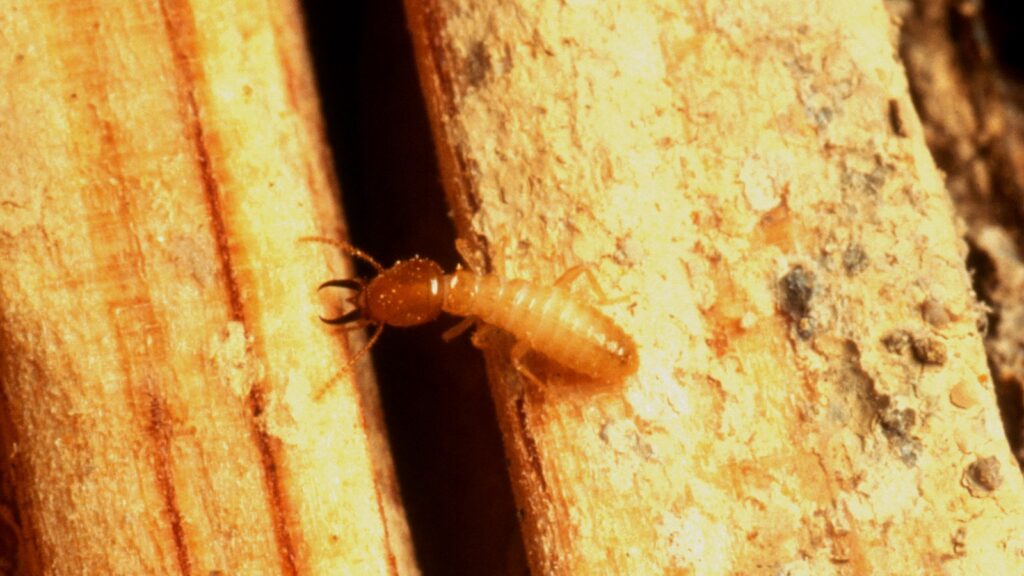
Two different termite problems live inside the Boca Raton city limits, and which one a homeowner is dealing with usually comes down to where the house sits and when it was built. East of Federal Highway, the original housing stock — the 1920s Mizner cottages of Old Floresta, the older streets through Royal Palm Yacht & Country Club, the Spanish River Land and Por La Mar coastal blocks, and the post-2000 luxury teardown rebuilds in between — carries drywood termite pressure. Barrel-tile roofs, wood-truss attics, exposed decorative hardwood in covered entries and pergolas, and original structural lumber in the attic voids are everything a drywood colony needs. Every spring, from March through May, swarmers leave the attic looking for new wood, drop their wings on windowsills and dock boards, and homeowners start finding tiny piles of what looks like coffee grounds or coarse sand below ceiling beams and fascia trim — the frass that drywood termites push out of kick-out holes as they eat.
West of the Turnpike, the picture flips. Newer slab-on-grade homes in Boca West, Boca Pointe, Boca Falls, Mizner Country Club, Stonebridge, and Broken Sound sit on heavily irrigated landscape with golf-course lakes a few yards from the foundation and mulch beds pressed up against the stucco. That’s subterranean territory. Eastern subterranean termites (Reticulitermes flavipes) are the workhorse species across Palm Beach County, but the Formosan subterranean termite (Coptotermes formosanus) has been documented in the county since the 1990s — and the golf-course communities and waterfront properties in Boca are exactly the habitat profile Formosan colonies favor: constant soil moisture, mature canopy, mulch close to the structure, and standing water within yards of the slab. A mature Formosan colony can have several million workers and chew through a pound of wood a day, which is why the inspection in a Boca West villa starts somewhere very different than the inspection in an Old Floresta cottage.
That said, both species can and do show up on either side of the city. A 1990s Boca Falls villa can pick up drywood activity in a wood-truss attic or exposed cedar pergola, and an Old Floresta cottage with mulch beds pressed against a stem wall can develop subterranean pressure. The neighborhood is the starting point for the inspection, not the answer.
Hoffer Pest Solutions has worked these streets for over 50 years. When a technician walks the property, the first read is structural — the construction era, the roof system, the slab perimeter, the irrigation pattern, the closest standing water — because that read tells us which termite we’re looking for before we go up into the attic or down along the foundation. The treatment plan a 1928 Mizner cottage in Old Floresta needs has almost nothing in common with the plan that protects a 1990s Boca Falls villa, and a generic termite quote that ignores the difference is the most expensive way to learn it. Call 954-892-5742 to schedule a free Boca Raton termite inspection — same-day appointments are available in most cases.
Our Boca Raton Termite Control Approach
The Inspection
Every Boca termite job starts with an inspection that reads the building, not a checklist. In an east-of-Federal home, the technician is up in the attic with a flashlight on the wood-truss timbers, checking the underside of barrel tile for daylight, probing fascia and rafter ends, and looking for the small piles of hexagonal pellets that mark a live drywood colony. Windowsills, door frames, exposed beams in covered entries, decorative wood trim, and any furniture made of solid hardwood get the same look. West-of-Turnpike, the work shifts to the slab — perimeter walk for mud tubes on stem walls and stucco, probing inside garage corners and utility chases, reading moisture levels along irrigation lines, and inspecting the soil interface around AC condensate lines, hose bibs, and expansion joints. On waterfront properties along the Intracoastal and the finger canals, dock pilings, seawall caps, and any wood in direct soil or water contact get a second pass. The inspection ends with a clear answer on what species (if any) is active, where it is, and what the right treatment is — not a quote on whatever’s most expensive.
Drywood Termite Treatments
For drywood termite infestations, the treatment depends entirely on how widespread the colony is. A localized infestation in a single attic beam, a section of fascia, or a piece of solid-wood furniture can often be handled with a spot or no-tent treatment — foam or liquid injection directly into the gallery, targeted at the active colony without disturbing the rest of the home. That option works when the infestation is accessible and clearly bounded. When drywood activity is spread across multiple attic timbers, hidden inside wall voids, or running through an older Mizner-era roof system where the same colony has had decades to expand, whole-structure fumigation is the treatment that finishes the job. Hoffer is fully licensed for tent fumigation in Boca Raton — the home is sealed under tarps, sulfuryl fluoride is introduced, and after the required exposure period and aeration, every life stage of the drywood colony (eggs, nymphs, soldiers, swarmers) is gone throughout the structure. For an Old Floresta cottage or an east-of-Federal home where the attic shows activity in more than one location, fumigation is usually the right answer, and we’ll say so directly.
Subterranean Termite Treatments
Subterranean termites need soil contact and moisture, which is why they show up where Boca’s irrigation, golf-course lakes, and mulch beds line up against slab foundations. Treatment generally takes one of two forms, and on higher-risk properties we use both. The first is a liquid termiticide barrier — trenching the soil around the foundation perimeter and treating it with a non-repellent product that kills foragers as they cross. The second is an in-ground baiting system: tamper-resistant stations installed around the perimeter that monitor for termite activity and, once a station hits, switch to a bait that workers carry back to the colony and feed to the queen, collapsing the colony from the inside out. For waterfront homes along the Intracoastal and the canal-front streets through Golden Harbour, Boca Harbour, and Lake Rogers Isles — and for the country-club properties west of the Turnpike where Formosan pressure is highest — combining a liquid barrier with a bait system is the redundancy that makes sense. Pre-construction soil treatments are also available for new builds in west Boca’s newer subdivisions.
Ongoing Protection & Annual Monitoring
Termite treatment in Boca isn’t a one-and-done job. Drywood swarmers will come back to a previously cleared home if conditions allow, and subterranean activity can re-establish anywhere the soil interface changes — new landscaping, a re-graded yard, a new irrigation zone, a roof leak that wets a wall cavity. We back termite work with annual inspections and warranty/bond options that keep the property under active monitoring year over year. For snowbird homeowners whose Boca property sits empty May through November, year-round monitoring matters even more — termites don’t take a season off because the owners are in New York.
Signs of Termites in a Boca Raton Home
The signs of drywood and subterranean termites are different, and so is the right response. Here’s what Boca homeowners actually see:
Drywood Termite Signs
- Frass piles — tiny hard hexagonal pellets that look like coffee grounds, salt, or coarse sawdust. Found in small piles on windowsills, attic floors, beneath ceiling beams, on furniture, or below fascia trim.
- Kick-out holes — perfectly round pinholes (about the diameter of a pencil lead) in wood surfaces. Drywood termites push frass out through these. Holes are often plugged with pellets or left open after a push.
- Swarmers — winged reproductives that emerge March through May in Boca, usually on warm evenings after rain. Equal-length wings (unlike flying ants). Often found around windows, light fixtures, and porch lights.
- Discarded wings — small piles of translucent wings on windowsills, door tracks, and pool deck tile after a swarm.
- Blistered or peeling paint — on wood trim, fascia, and window frames, caused by moisture and frass building up behind the paint surface.
- Hollow-sounding wood — tap suspected wood with a screwdriver handle. Infested wood sounds hollow and may give way under light pressure.
Subterranean Termite Signs
- Mud tubes — pencil-width tunnels built of soil and saliva on foundation walls, stem walls, slab edges, plumbing penetrations, and inside garage corners. Live tubes have workers moving through them when broken open.
- Swarmers — Eastern subterranean swarmers emerge sporadically February through April. Formosan flights are larger, more coordinated, and usually happen at dusk in the same window — homeowners report “clouds” of termites around landscape lighting, pool cages, and porch lights.
- Hollow or honeycombed wood — subterranean termites eat from the inside out along the grain. Probing reveals galleries packed with soil and mud rather than dry chambers.
- Sagging floors, sticking doors, buckling baseboards — late-stage damage, usually behind drywall or inside floor systems, that means a colony has been working for a while.
- No pellets — subterranean termites do NOT produce the pellet frass that drywood termites do. They use their waste to build mud tubes and pack galleries. Pellets on a windowsill are drywood; mud on a foundation wall is subterranean.
One more note: large black or red-and-black ants pushing sawdust-like debris out of a wood beam are usually carpenter ants, not termites. They damage wood, but they don’t eat it, and the treatment is different. If the “frass” looks more like wood shavings than pellets, the answer is on our Boca Raton ant control page — and either way, an inspection will sort it out in a few minutes.
Termite Pressure Across Boca Raton
In the east-of-Federal historic and coastal neighborhoods — Old Floresta, Spanish River Land, Por La Mar, and the older streets through Royal Palm Yacht & Country Club — drywood termites are the dominant concern. Mizner-era construction means barrel-tile roofs over wood-truss attics, decorative wood fascia and trim, and original structural lumber that’s been seasoning in Florida heat for nearly a century. Post-2000 luxury rebuilds in the same neighborhoods often double down on exposed hardwood (cedar pergolas, mahogany doors, tropical-hardwood ceilings in covered patios) — also drywood-vulnerable. March-through-May swarmers are the annual signal; the kick-out holes and frass piles are the year-round one.
Along the Intracoastal and the finger-canal streets — The Sanctuary, Royal Palm Yacht & Country Club, Boca Harbour, Golden Harbour, Lake Rogers Isles — the picture is mixed. Drywood pressure is still there in the older waterfront homes, but the seawalls, dock pilings, and mulch beds pressed against canal-front foundations create the exact moisture-and-wood interface subterranean termites (including Formosan) look for. Waterfront properties in Boca generally need to think about both species at once.
West of the Turnpike, the country-club communities — Boca West, Boca Pointe, Boca Falls, Mizner Country Club, Stonebridge, St. Andrews, Broken Sound — are subterranean country. Slab-on-grade construction, daily irrigation cycles run by HOA landscape crews and golf-course maintenance, golf-course lakes within yards of foundations, and mature oak canopy with deep mulch beds add up to ideal Eastern and Formosan habitat. These are the Boca neighborhoods where a liquid-barrier plus baiting combination tends to make the most sense, and where annual monitoring earns its keep.
The newer west Boca developments — Boca Bridges and the surrounding country-club communities west of 441 — sit on the same subterranean-favorable footprint: slab construction, heavy irrigation, mature landscape buffers, and proximity to the Loxahatchee preserve edge. New builds in this footprint benefit from pre-construction soil treatments before the slab is poured; existing homes benefit from baiting systems installed at the perimeter before activity shows up inside.
Hoffer Pest Solutions: Boca Raton Termite Specialists
Over 50 years of Hoffer technicians have walked Boca attics, slab perimeters, seawalls, and country-club irrigation lines. The difference between a drywood and a subterranean infestation is something an experienced tech reads in the first thirty seconds of an inspection — frass on a windowsill versus a mud tube on a stem wall, wood damage along the grain from the inside versus surface galleries packed with pellets. We’re fully licensed for tent fumigation, equipped for liquid barrier and in-ground baiting on subterranean jobs, and we back the work with a satisfaction guarantee and warranty options that keep your property under active monitoring after the treatment is done. Old Floresta cottage, Boca West villa, Royal Palm Yacht waterfront, Stonebridge custom on an acre — the inspection is free and the treatment plan is built for the actual house. (For attic-related concerns beyond termites — roof rats in the wood-truss systems of older Boca homes, for example — see our Boca Raton rodent control page.) Call 954-892-5742 to get on the schedule; same-day inspections are available in most cases.
Termite control is one piece of a broader Boca Raton pest control plan; for ants, rodents, mosquitoes, cockroaches, bed bugs, and ongoing residential protection, start at the Boca Raton pest control hub or call the number above. For Hoffer’s full termite control coverage across South Florida, see our general termite control page.
Frequently Asked Questions: Termite Control in Boca Raton
How do I know if my Boca Raton home has drywood or subterranean termites?
The simplest tell is what you’re finding and where. Drywood termites leave small piles of hard hexagonal pellets — frass that looks like coffee grounds or coarse sawdust — on windowsills, attic floors, below ceiling beams, or on the floor under fascia trim. Subterranean termites leave pencil-width mud tubes on foundation walls, stem walls, and inside garage corners, but no pellets at all. Drywood is most common east of Federal Highway in Boca’s older Mizner-era housing stock; subterranean is most common west of the Turnpike in newer slab homes in the country-club communities. A free inspection nails down the species and the location in one visit.
What time of year do termites swarm in Boca Raton?
Both species swarm in spring in Southeast Florida, but on slightly different timing. Drywood termite swarmers (the winged reproductives that fly off to start new colonies) emerge March through May, typically on warm evenings after rain. Eastern subterranean swarmers come a little earlier — February through April — and Formosan subterranean swarmers, when present, fly in coordinated dusk flights in the same February-through-April window and often draw “clouds” of termites to porch lights, pool cages, and landscape lighting. Outside swarm season, both species are still active and feeding year-round — the swarmers are just the most visible sign.
Does Hoffer do tent fumigation in Boca Raton?
Yes. Hoffer is fully licensed for whole-structure tent fumigation and uses it as the standard treatment for widespread drywood termite infestations — the kind where colonies have established themselves in multiple attic timbers, wall voids, or hidden cavities in an older Mizner-era home. Fumigation seals the structure under tarps, introduces sulfuryl fluoride, and after the required exposure and aeration kills every life stage of the drywood colony throughout the home. For smaller, localized drywood infestations, no-tent spot treatments are also available — the inspection tells us which option fits.
Are Formosan termites in Boca Raton?
Yes. Formosan subterranean termites (Coptotermes formosanus) have been documented in Palm Beach County since the 1990s, and Boca Raton’s habitat profile — heavily irrigated golf-course communities, waterfront properties along the Intracoastal and finger canals, mulch-heavy landscape buffers against slab foundations, and mature canopy with constant soil moisture — is the kind of footprint Formosan colonies favor. They’re more aggressive than the native Eastern subterranean termite and harder to control once established, which is why we usually recommend a layered approach (liquid barrier plus baiting) on properties where the pressure profile fits, especially in Boca West, Boca Pointe, Mizner Country Club, Stonebridge, and the canal-front streets.
Do I need annual termite inspections on my Boca Raton home?
For most Boca homeowners, yes — and not as a formality. An annual inspection catches new activity early, when it’s still a spot treatment instead of a structural problem, and it keeps any warranty or bond on existing termite work in force. For older east-of-Federal homes where drywood swarmers can re-enter year over year, and for west-of-Turnpike country-club homes where subterranean conditions don’t change between seasons, the annual walk-through is the single most cost-effective piece of termite protection there is. For snowbird homeowners whose Boca property sits empty May through November, annual inspections matter even more — we recommend timing the inspection around the return so we can flag anything that started while the home was vacant.